
In Stage 1 you learned to validate a niche with your own eyes and an incognito window. For most sellers, that is enough to choose a niche that's suitable for your shop. This module goes a bit deeper. You will learn how to compare your finalists with data when your gut can't pick between them. You will also learn which research tools speed the work up, how to hunt for market gaps in more places, and how to keep using all of this for the life of your shop.
One reminder before you start. Do all of this research in an incognito window, and open a fresh one every 20 to 30 pages. Etsy personalises what it shows you, and personalised results will quietly skew what you find.
Choosing between finalists with data
Your Stage 1 work has already given you the raw material for this. From Step 2 you have demand evidence for each candidate, which includes autocomplete phrases, badges, and review velocity. From Step 3 you have a read on competition, which includes your niche-down ladder and the result counts.
You gathered both of those at two levels. The first is the broad keyword for the niche, such as "soy candle". The second is the niche keyword for your specific corner, such as "soy candle gift set for new mums".
Now turn those observations into a simple ranking of demand and competition for each candidate. Then read the combinations below.
High demand, low competition, at both levels. A small number of sellers is absorbing a large amount of demand. These are your best entries. They are also rare, so it's worth celebrating when you find one.
High demand, high competition. This is a crowded market, but it is a living one. It is not automatically a bad choice. Gaps and niching down can both make it work. Just go in knowing it will take more effort, because a lot of sellers are actively competing for the same customers.
Low demand, at any competition level. Stay out. Low demand with high competition means many sellers are fighting over scraps. Low demand with low competition means the market barely exists. No amount of craft will fix an audience that isn't searching.
When your broad and niche keywords disagree, the niche keyword usually decides it. If your niche keyword shows high demand and low competition, go into that sub-niche even if the broad market looks crowded. You are not selling to the broad market anyway. If the broad keyword looks strong but your chosen sub-niche shows weak demand, don't give up on the niche. Try a few adjacent sub-niches instead. The demand is in there somewhere. You just haven't found the right corner yet.
When two or three finalists tie on the data, the tie-breaker is you. Look at your interest, your skills, and your unfair advantages. This isn't a consolation prize. It is exactly what the scorecard in Stage 1, Step 7 is for. The niche you will still enjoy making for in a year is worth more than half a point of demand.
Finding market gaps others miss
A market gap is demand that existing products don't fully satisfy. Every strong USP is built out of one. Stage 1, Step 5 gave you the main tool for finding them, which is reading the 2 to 4 star reviews on your close competitors. Here is the rest of the kit.
Read the middle reviews everywhere, not just on Etsy. Your product category also sells on Amazon, Amazon Handmade, and eBay. The 2 to 4 star reviews there hold the same honest complaints and suggestions, and often there are far more of them. When you see the same complaint on more than one platform, treat it as a brief for your next product.
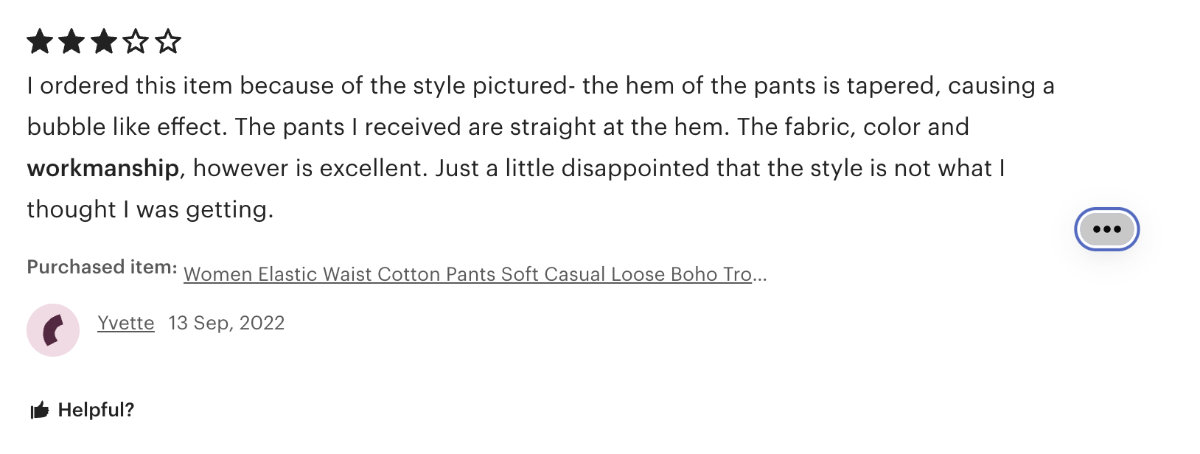
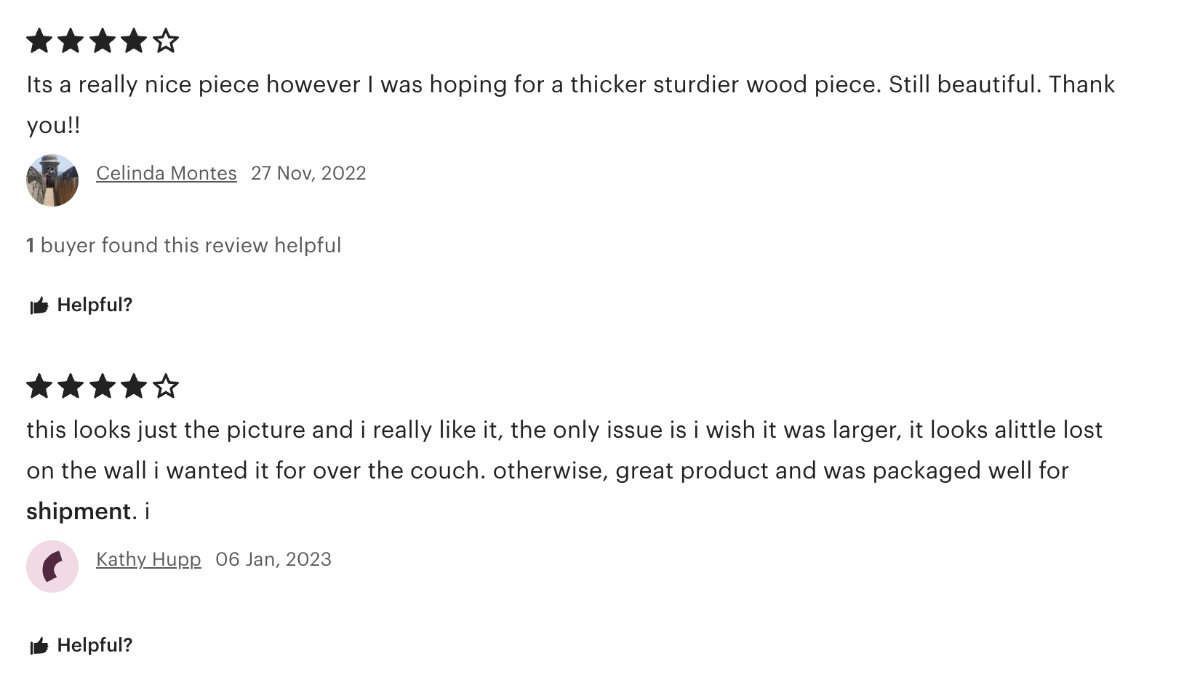
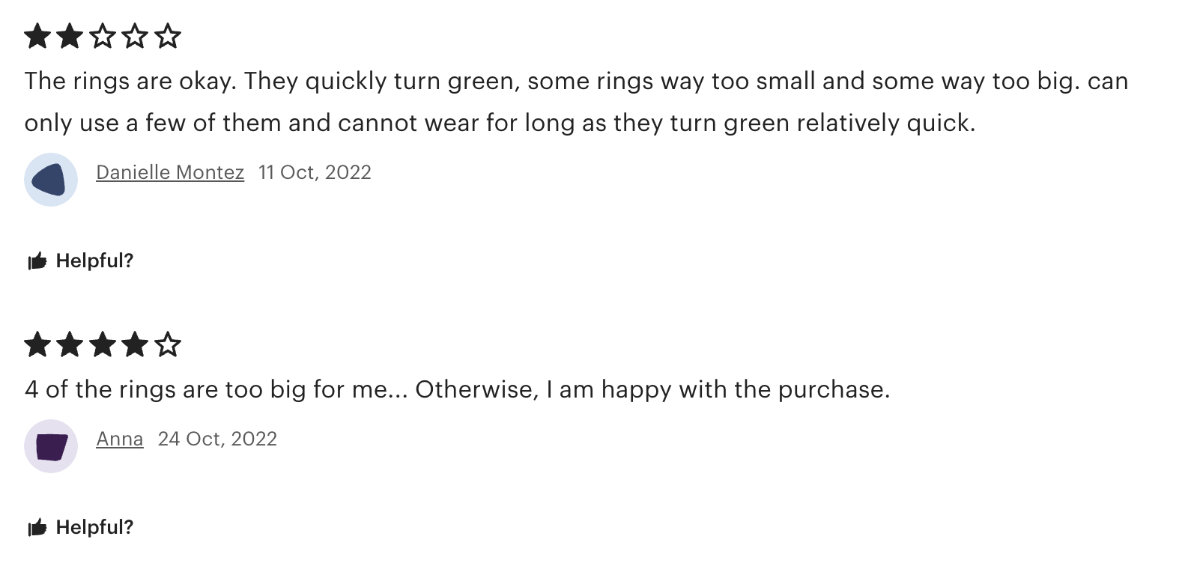
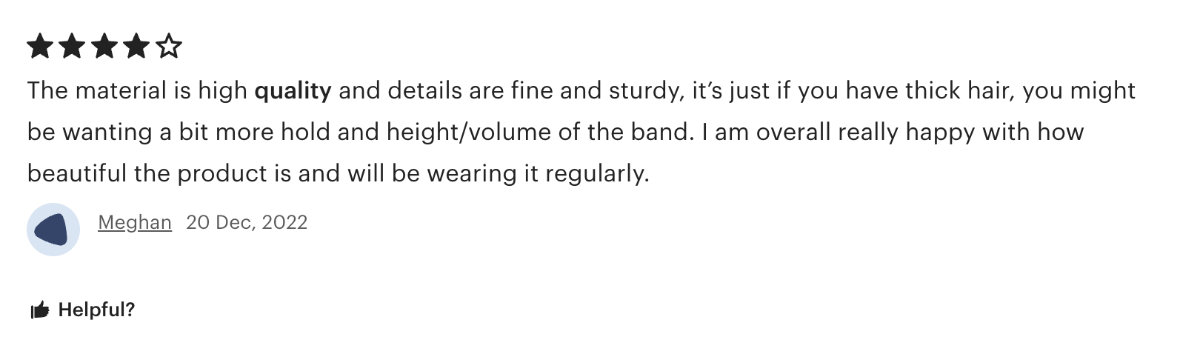
Here are some real examples of what this turns up. Cotton pants had reviews that revealed a gap between the sizing and what buyers expected. Buyers of wooden wall decor kept asking for thicker wood and bigger sizes. Stackable rings attracted complaint after complaint about tarnishing. One headband review pointed to a whole sub-niche. Rug buyers wanted their rug thicker and non-slip on wooden floors. Every one of those complaints describes a better product that nobody has made yet.
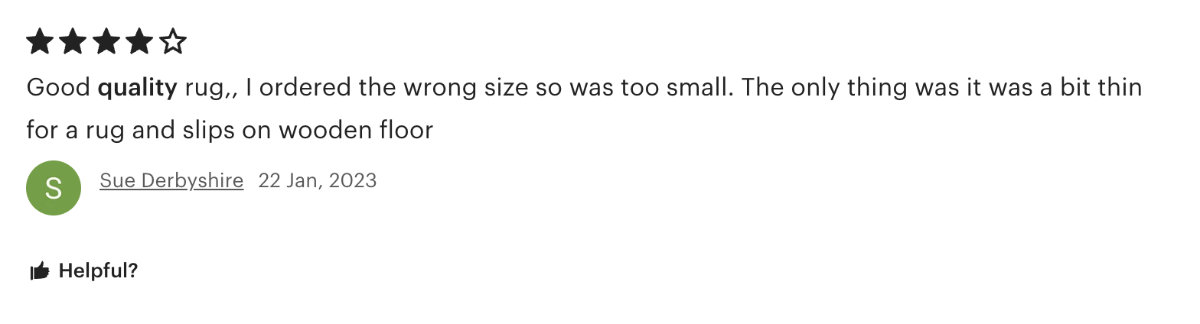
Use the search bar as a gap detector. Autocomplete shows you what shoppers actually search for. So when a suggested phrase returns very few listings that match it exactly, you have found a gap. Shoppers want it, nobody is supplying it, and the demand is already proven. This is the same signal the Trend Fast Lane uses to catch waves early. Here you are just using it calmly, on evergreen products.
Now put your two lists together. From Stage 1 you know what motivates your target customer. From this gap hunting you know where competitors leave that customer unsatisfied. Where the two lists overlap, you have your direction. You want products that are genuinely different and genuinely wanted. Being different on its own doesn't pay.
Niching down, properly
You learned the mechanics of niching down in Stage 1, Step 3. Here is one reminder and two things to add.
The reminder is simple. Niching down means narrowing to a smaller, more targeted group of people that you can serve better than any generalist can.
The first addition is that specialisation builds on itself. When you become the expert in a small corner, you build a loyal customer base that values you for more than your price.
The second is that niching down is not only a beginner's move. It is also the usual way out of a hyper-competitive category like jewelry or printables. The broad market in those categories is unwinnable, but a hundred sub-niches are still wide open.
Research as an ongoing habit
Market research is not a phase you finished in Stage 1. It is a skill you now own, and you will use everything above for the life of your shop. This is what separates sellers who plateau from sellers who keep adapting. Here are four ways to keep using it.
Your products. Go gap hunting again to find new products that fill unmet needs. Refine your existing products around the features your customers praise and the pain points they report. Let competitor pricing and buyer behaviour guide your own pricing reviews. You will find the method for that in Stage 2, Step 3 and in the Charging More With Confidence deep dive.
Your listing photos. Let your target market's taste steer your photography. A minimalist audience wants clean backgrounds and simple props. A maximalist audience wants abundance. Put your strongest USPs and your answers to their pain points on your informational photos as text overlays. The full system for that is in the Conversion Masterclass.
Your listing descriptions. Write to the pain points your research uncovered. If your market cares about sustainability, put your eco-friendly materials and process near the top. Use their words for it, not yours.
Your Etsy SEO. The words your customers use in their reviews and searches are your keywords. This is why reading reviews keeps feeding your keyword map. It is also why sellers who do this research rank for phrases their competitors never thought to target.
Now the schedule. This whole module is what sits behind the "listen for drift" habit in Stage 6, Step 2. Once a quarter, at your review, do three things. Re-read the middle reviews. Run the search bar gap check on your niche again. Glance at the competition bands on your keywords. That takes about fifteen minutes each quarter, and the market will never move far without you noticing. This is how a shop stays fresh instead of going stale.