
In Stage 2, Step 3 you learned the maths. That covered your true cost, the divide-by-0.89 method, and the margin-for-sales rule. This module is the other half of pricing, which is the value side. You will learn how to raise what your work is worth in the shopper's eyes, so that a higher price converts instead of scaring people away. The maths tells you the lowest price you can afford to charge. This module helps you raise the highest price you can charge.
The 10 ways to increase perceived value and charge more
Price objections are rarely about the number. Usually the shopper just can't see enough value yet to justify it. Every method below adds value they can see.
1. Upgrade your materials, and let buyers know. Name the material in your listing. Write "925 sterling silver" or "100% Australian merino" or "archival cotton paper". A named material justifies a price in a way that "high quality" never can. A named material is a fact the shopper can check. "High quality" is only a claim.
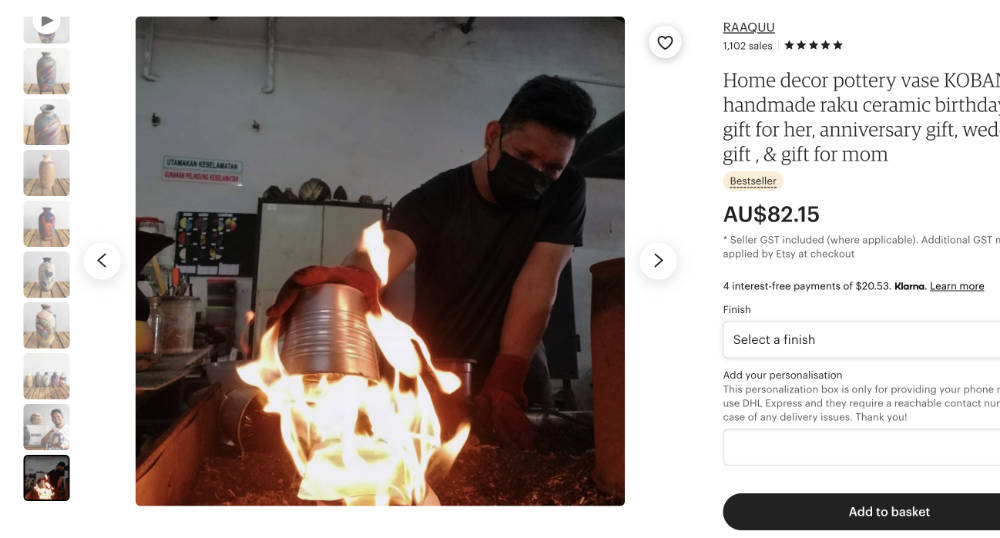
2. Show the labour. Shoppers pay more for work they have watched happen. Your process photos and your listing video from Stage 2, Step 5 are pricing tools. When you tell someone that each board takes four days of oil coats, the number on the tag starts to look fair, and sometimes even generous.
3. Elevate your packaging. The unboxing you designed in Stage 2, Step 2 raises what the product feels worth before anyone has even used it. Put a packaging photo in your gallery so the shopper takes in that value before they judge the price. In gifting niches, gift-ready presentation on its own supports a real premium.
4. Add personalisation. A custom name, date, or message takes you minutes and lifts your price far beyond what it costs you. A shopper can't compare the price against anyone else's, because nobody else is selling that exact item.
5. Bundle into sets. A candle on its own is a product. A candle with matches and a wick trimmer in a gift box is a solution. Solutions carry a higher price with less resistance. Bundles also raise your average order value without raising the price of any single item.
6. Sell the outcome, not the object. Your listing copy should price the transformation. Don't sell a linen apron. Sell the cooking ritual it belongs to. The two emotional triggers from the Conversion Masterclass are doing pricing work every time you use them.
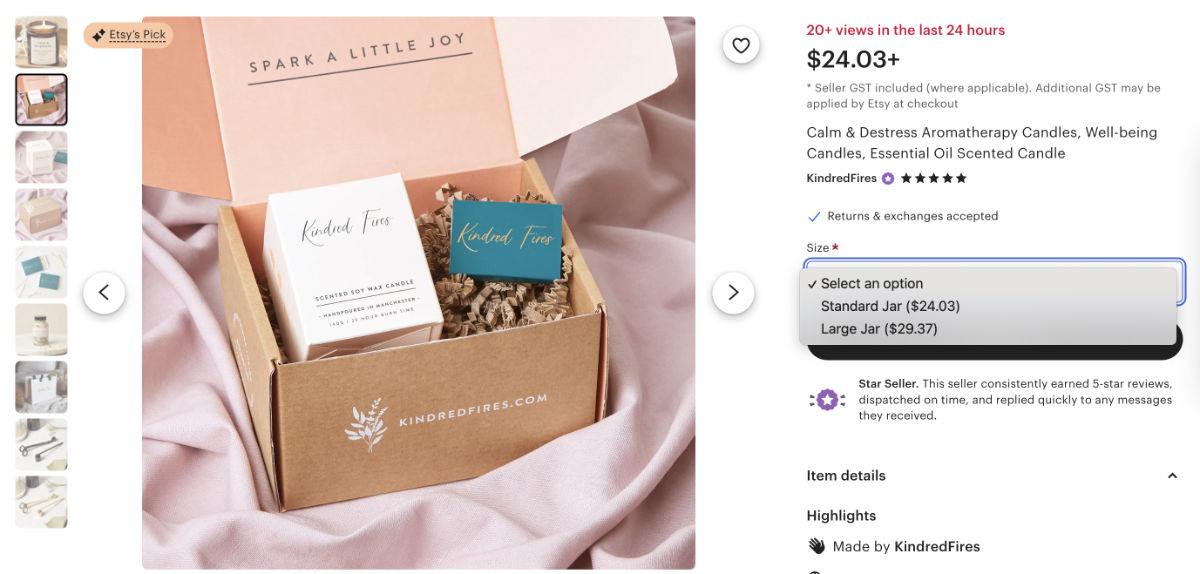
7. Offer tiers. Give shoppers a standard version and a premium one. The premium version might be larger, or made with a rarer material, or wrapped in deluxe packaging. Now the shopper chooses a price instead of judging the only one you offered. Your premium tier also makes the standard look reasonable, and some buyers will happily take the top tier anyway.
8. Attach a guarantee. This could be a repair promise, a replacement policy, or a simple "love it or message me" line. A guarantee moves the risk from the buyer across to you, and shoppers will pay for that. Only offer what you can genuinely honour.
9. Build your brand signals. Reviews, a consistent visual identity, and a real maker story all count here. Everything you built in Stages 2 and 3 lets you price at the top of your niche's range. A shop that looks established is simply allowed to charge more than an anonymous one.
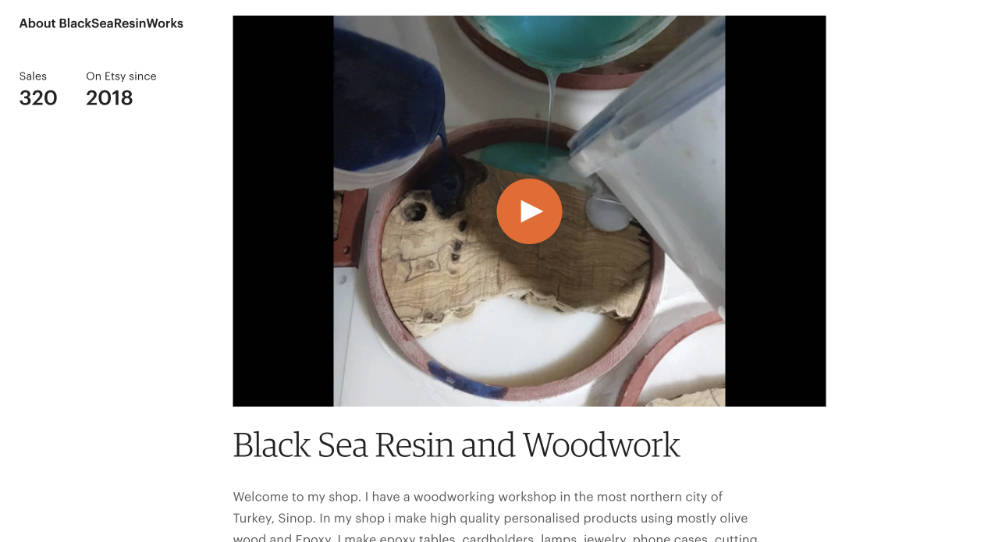
10. Claim your expertise. Think of certifications, years at the bench, teaching credentials, and press mentions. One line of genuine authority in your About section and your descriptions quietly moves your acceptable price range upward. Something as simple as "trained in traditional bookbinding over eight years" will do it.
Pick the two or three that fit your craft. Put them in place where shoppers can see them. Then open the calculator and revisit your prices.
Pricing psychology that stays honest
Here are a few well-tested effects. Use them the GYC way, which means never against the customer.
Charm pricing versus prestige pricing. $19 reads as meaningfully cheaper than $20, so charm pricing suits products positioned on value. Round numbers like $45 and $120 read as considered and premium. That is why higher-end handmade work often converts better without the ".99" on the end. Match the style to your positioning rather than to habit.
Anchoring. Shoppers judge a price against the first number they saw. Your premium tier, your bundle, and even your competitors' prices all anchor the shopper before they reach your standard item. This is one more reason tiers and bundles earn their place.
The decoy effect. Sometimes two options split shoppers evenly. Add a third option that costs almost as much as the premium but clearly offers less, and most buyers will move to the premium. On Etsy this usually means sizing your middle option so that the large one becomes the obvious choice. Use this to make a genuinely better deal clearer. Never use it to trick someone into a worse one.
Ease of justification. People buy what they can explain to themselves, and often to their partner as well. Give them one line in your copy that does the explaining for them. Something like "costs less per burn hour than a supermarket candle, and it's actually soy" hands the shopper their own argument.
The roadmap's honesty rules set the boundary on all of this. Use real numbers, real scarcity, and real comparisons. Psychology that reveals true value builds your brand. Psychology that invents value you don't have will damage it later.
Two examples
The underpriced mug. A maker was selling hand-thrown mugs at $24 when her true cost was $22.50. She was earning almost nothing, and she was afraid to raise her price. She added a materials line, a process video, and a gift-box photo. Then she opened the calculator and repriced to $34. Sales dipped for a fortnight and recovered within a month. Every sale now carries a real margin, and that margin later funded her first market stall.
The tier ladder. A digital planner seller was stuck flat at $9. She added a $19 bundle, which paired the planner with matching budget sheets, and a $29 mega pack. A third of her buyers chose one of the higher options. Her average order value rose by more than half. The $9 planner also stopped looking like the whole shop and started looking like the entry point to a range.
Other questions You May Have
"Can I raise prices on a listing that already sells?" Yes. A modest rise of 10 to 20% on a proven listing usually passes unnoticed, because the reviews and photos have already justified the value. Raise the price, then watch your conversion rate for a month against your benchmark. The listing's history keeps working for you the whole time. Just avoid raising a price mid-promotion, or right before your gifting peak.
"What about my existing customers?" They are the least price-sensitive people you have, because they have already experienced the value. You can give your email list a heads-up before a rise if you like. Tell them that prices go up on the 1st, and that the current prices hold until then. It is honest, it builds goodwill, and it usually gives you a small bump in sales.
"A competitor sells 'the same thing' for half my price." Then it isn't the same thing. Your listing's job is to make the difference visible through your materials, your process, your packaging, your story, and your proof. You will lose the shoppers who buy on price alone, and that is fine. They were never your persona. You can compete on price alone, but if you win that way you end up with no margin left.
"Isn't discounting easier than justifying?" When you discount, you are paying for those extra sales out of your own margin. Stage 5, Step 4 covers the times when that is a wise thing to do. As an everyday strategy it trains your customers to wait for a sale, and it starves the margin that funds everything else. Raise your perceived value first. Then discount rarely, and always with a reason.
"How do I know I've gone too high?" Your conversion rate will tell you, measured against the niche benchmark from Stage 3, Step 1. At a market you will find out faster, because you can watch people react to the price. If nobody ever flinches, you are probably still too cheap.