
This stage aims to change that. You're going to build the one asset in this whole roadmap that helps you fight algorithm updates, fee increases, or policy changes. We will do that by building a list of people who chose to hear from you, and a set of simple systems that turn one-time buyers into your repeat buyers.
And you're not starting from zero. The insert cards have been riding in your parcels since Stage 2, the link-in-bio has been live since launch, and a trickle of followers and sign-ups has already begun. This stage takes that trickle and builds that into a steady stream for your shop.
Came here via The Trend Fast Lane? This stage matters double for you. Trends disappears but lists don't. Capture the wave's buyers while they're arriving, and you'll still have an audience when the tide goes out.

Choose a platform. MailerLite, MooSend, and Kit (formerly ConvertKit) are all reliable, friendly to beginners, and free at the list size you're starting with. Don't spend too much time here. They are all great options with all the features Etsy sellers need the most: They all send emails (with good deliverability), host sign-up forms, and automate sequences. Browse them for 10 minutes and pick the one that stands out to you.
Now, keep in mind the permission rule. You cannot add a buyer to your list yourself without their permission. Not from their order details, not "just this once", not because they seemed lovely. It breaks Etsy's rules, it breaks privacy law in most countries, and it breaks the very thing that makes a list valuable: these are people who chose you. We will learn how to build the invitation that lets them sign up to your list in Step 3.
Build your first door frame. Create a simple sign-up form or landing page on your platform: your logo, one warm line in your brand voice about what subscribers get, an email field, done. Connect it to your link-in-bio from Stage 2, replacing the placeholder sign-up you set up back then. The QR code on your insert cards can now lead to your sign up form.
Go deeper: The Email System (the full system behind this whole stage: choosing a platform, growing the list, writing for opens, and reading the numbers)
"Join my newsletter" is not effective. People guard their email inbox, and rightly so. To earn a place in it, you need to trade something small and genuinely valuable to your target customers. That something is your lead magnet, and the best one for your shop is hiding in the Stage 1 persona you wrote months ago. What does your customer wish they had?
The reliable options for handmade shops:
- A first-order discount. Simple, classic and effective. And this should be already budgeted for, because this is another job for the margin you protected in Stage 2. 10% usually works here.
- A care guide. "How to make your candle last twice as long", "Caring for hand-dyed yarn". It should be useful, relevant to the main products you sell, and it also helps quietly prove your expertise.
- Early access. First look at new drops and restocks before Etsy sees them. For small-batch work that genuinely sells out, this is belonging plus scarcity in one, and it costs you nothing.
- A small printable or guide that fits your niche. A gift-tag sheet from a stationery shop, a ring-size chart from a jeweller, a seasonal recipe card from a food-adjacent maker. It should be something that doesn't cost you anything, but is valuable and relevant to your customers.
Pick one, make it with your brand kit in mind in an afternoon (use your brand colours and fonts), and set your platform to deliver it automatically the moment someone signs up. This is where you use the automation feature of your email marketing platform: The lead magnet arriving instantly is the first promise you keep, and the instant delivery of value helps you build trust with your potential customers.
Your list grows through three doors, and each one catches your customer at a different moment. The principle across all of them: One door, one ask. A message that asks for a review and a sign-up and an Instagram follow overwhelms, and gets none of them.
Door one: the insert card. Already in every order since Stage 2, catching your customer at peak delight with the product in their hands. Now that the QR code lands on a real sign-up page with a named incentive, consider a small print update so the card says what's on offer: "Scan for 10% off your next piece" which is more effective than "Find us online."
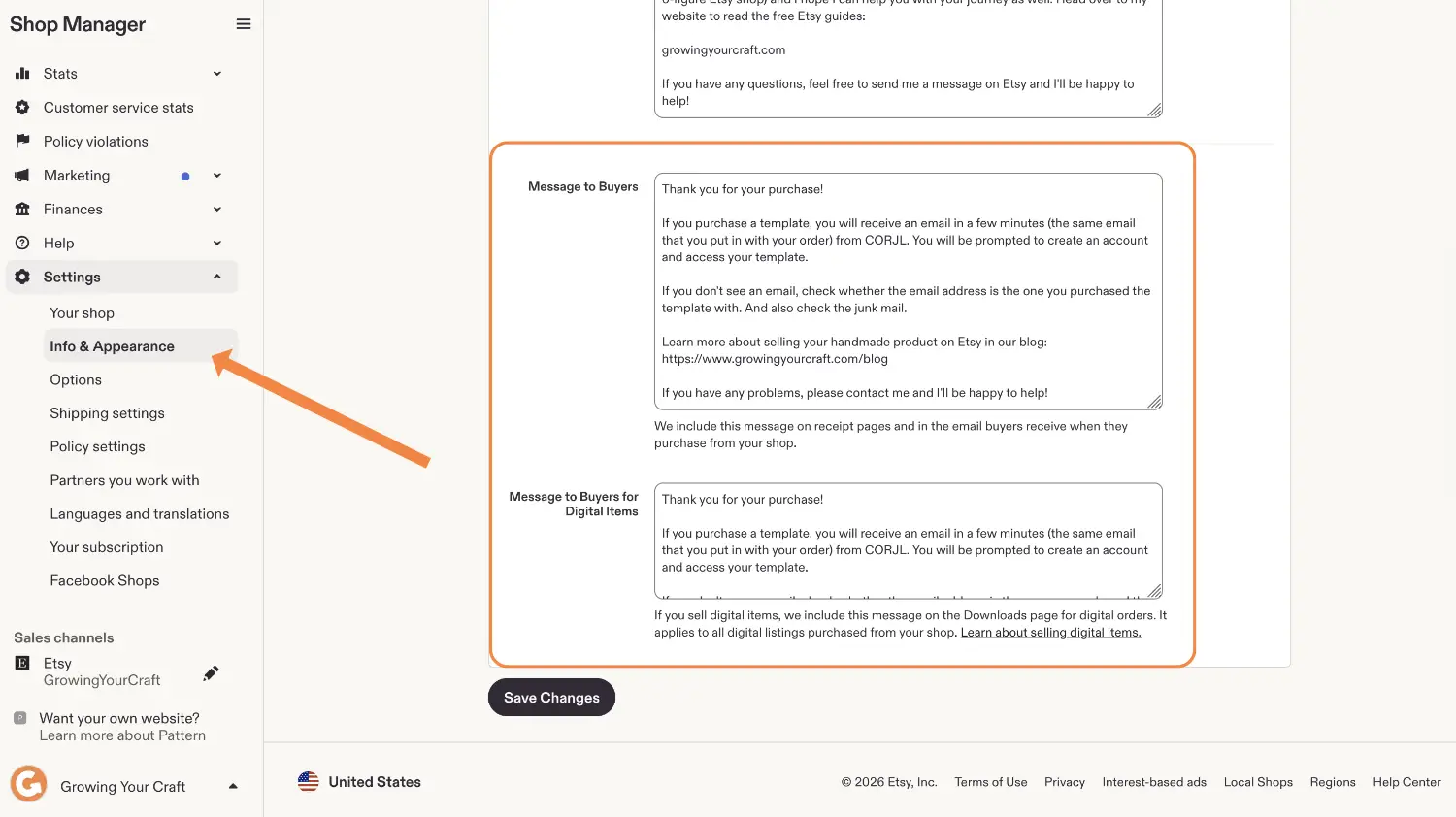
Door two: the order receipt. Etsy lets you send an automatic thank-you message with every order, and your Order Receipt Banners from the Toolbox dress the receipt itself in your brand. Put the invitation here: A warm thank-you, and one line with the link: "As a small thank-you, subscribers get [your lead magnet]. You can join here." This is the compliant way to build your list. But I would recommend not to use the discount code lead magnet for this, as your customer would think "I just paid full price for this 5 minutes ago".
Door three: the link-in-bio. Already live, now upgraded with the magnet. This door catches the people who haven't bought yet: the followers your 'Show Your Work' habit has been gathering since Stage 1. Mention it naturally in your content, roughly once a week: a story, a caption line, a "link in bio for [benefit/lead magnet]".
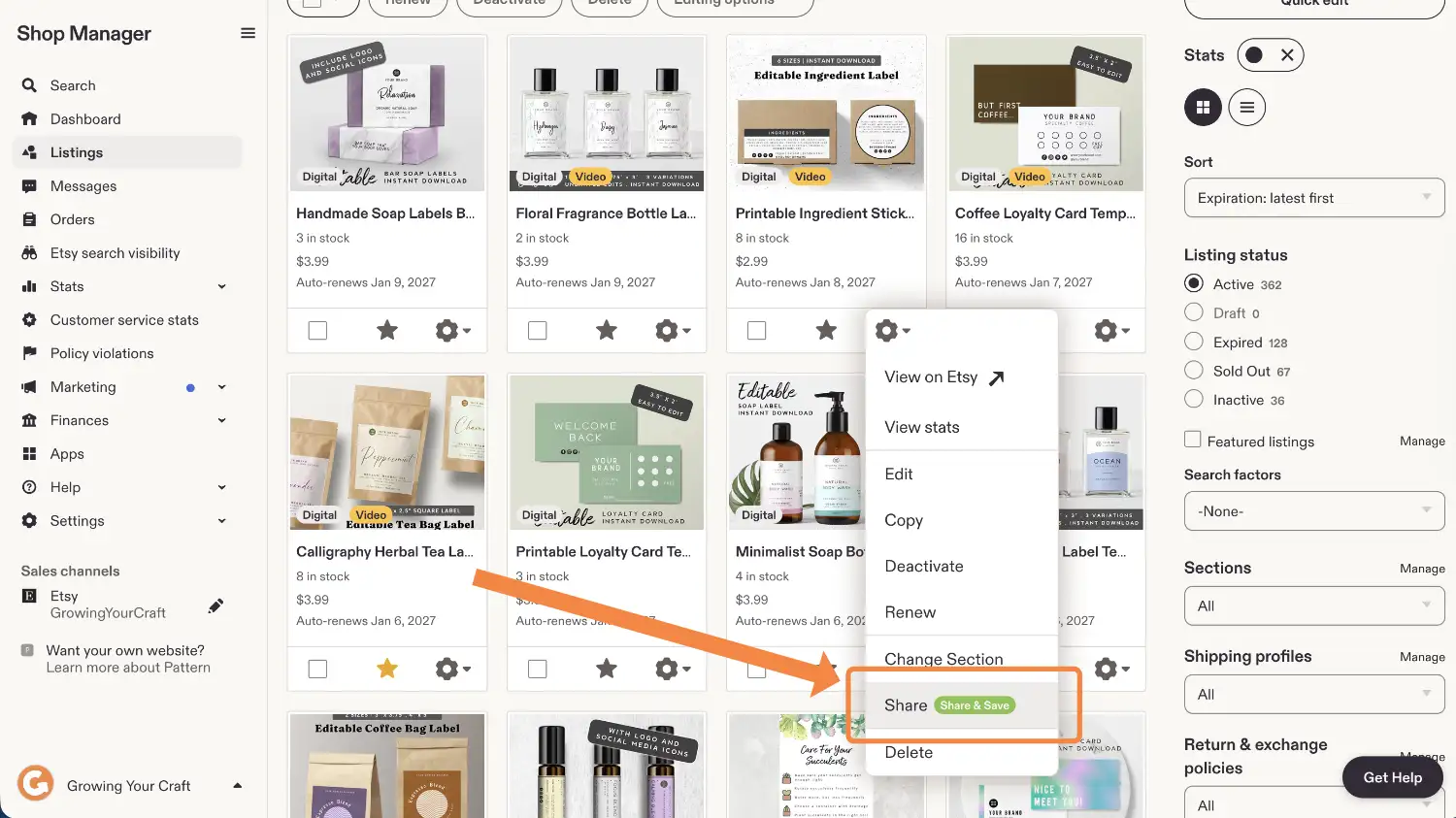
One more switch to flip while you're here, and this one should be a habit that you have from now on whenever you share links to your shop: Join Etsy's Share & Save program (Shop Manager → Marketing → Share and Save). Once you're in, any traffic you send to your shop through your trackable link format (yourshopname.etsy.com) earns you a refund of 4% of the order total whenever a buyer purchases within 30 days of clicking. So Etsy literally pays you for the exact work you're doing in this stage anyway. And those savings build up. So keep in mind to use the Share and Save format for any links to your Etsy shop and listings.
Extra note for digital sellers: Your door one is the page inside your download, the one you built in Stage 2, and it may be the strongest door on the roadmap, because every single buyer opens the file. No shipping limits, no inventory ceiling, a global audience, and launches that can go from send to sales in an hour. Many mature digital shops quietly earn more from their list than from search. Treat this stage as your main event, not a side quest.
Notice what you've built: a buyer can now meet your invitation three times, at the parcel, at the receipt, and at your profile, each time with one clear ask. From here, every sale Etsy sends you has a decent chance of becoming a subscriber you keep. That's a system you've now built that runs for you in the background.
Toolbox: Order Receipt Banner Templates
The moment someone subscribes is the moment they're most interested in you, and a welcome email sequence can meet that moment and helps you build a positive relationship with the subscriber for you automatically. We will write three emails that's forever green. The Email Automation Templates in your Toolbox give you the skeletons. Here's what each one does:
Email 1, immediately: Deliver lead magnet and introduce your shop. Start with delivering the lead magnet they came for. Then a short maker story from Stage 2: Who you are, where the work happens, why you make it. You are a person, not a brand, and this is where they learn it. You can include a photo of you at the workbench to make it a bit more personable.
Email 2, two days later: show your best. Your bestsellers and the stories behind them. It can be the piece that sold out, the design a customer requested that became a fan favourite, a kind review over the photo of the piece it praises. You're not trying to sell hard. Instead, you're giving a small guided tour of the shop by the person who made everything in it.
Email 3, two days after that: the gentle invitation. If your lead magnet was a discount, remind them it's waiting and prompt them to use it and try your products. If it wasn't, a soft first offer works here. And end with a question you genuinely want answered: "Are you shopping for yourself or looking for a gift? Hit reply and tell me, I read every email." Them replying also teaches the inbox providers that your emails are wanted and not spam.
Write all three in the Stage 2 brand voice, put them into your platform's automation, and send yourself a test email sequence to double check while you put yourself in your customer's shoes. After it's tested, then it can run without you.
A simple, straightforward email that goes out every month beats the perfect one that never leaves your draft.
The rhythm: About monthly, more often only when there's genuinely news and a reason to send more emails. Your campaign topics can be: a new product or restock (your early-access subscribers hear first, as promised), a seasonal or holiday offer, a care tip email that improves customer satisfaction, behind-the-scenes stories that's genuine interesting, etc. If they sound kind of familiar, that's because they are highly similar to the 'Show Your Work' posts, just re-told in a different format.
The balance: Warm tone like talking to a friend, as that's what people who buy handmade come to expect. But you still need to do the occasionally selling. In those cases, show your true enthusiasm and passion about your products, which can soften the 'hard selling' feeling of your marketing emails.
And most importantly, track the money. Create a coupon code that exists nowhere except your emails (for example, SUBSCRIBERS10, or whatever suits your voice). That way you'll be able to see every order a particular email produces, as well as its revenue.
A first sale is expensive: it took ranking or ads or luck to earn. The second sale from the same person costs significantly less, and shops with regulars are the ones that survive fee rises and slow seasons. 9 out of 10 times, long-term success is built on repeat purchases. So in this last step, let's learn how to build the machine with one goal: Getting the second purchase. Don't rush it and build the mechanics that fit your product first. You'd rather have one running well than three half-built ones.
The post-purchase flow. A short automated sequence for subscribers who've just bought from you: Care tips a week after delivery (helpful, no selling, and it helps your customer make the best out of the purchase), then another email a few weeks later suggesting a companion piece (like a matching plate to a mug). The chance of the customer buying again to complete a set is much higher than a random shopper on Etsy.
Replenishment reminders. If your product gets used up (candles, soap, skincare, tea, anything consumable), you know roughly how long it lasts, so schedule the reminder to arrive just before it runs out: "About now, you should be about to use up the last soap in your set..." It feels less like marketing and more like a friendly reminder.
Occasion reminders. Your Stage 1 persona probably buys for moments: birthdays, anniversaries, Mother's Day. A simple email a few weeks before the next big gifting moments ("Mother's Day is just 4 weeks out, and the made-to-order mug takes 1 week ...") serves the gift buyer exactly when they need serving, and your processing times make the urgency honest.
VIP early access. The easiest one, because you promised it in your lead magnet: new drops and restocks go to the list a day or two before you tell other people like on social media. For genuinely small batches this creates real, honest scarcity, trains subscribers to open your emails, and makes your subscribers feel special.
Whichever you choose, notice that your Etsy business is really starting to take shape. Etsy finds the customer once, but it's your systems that welcome them and keep them coming back again and again.
Go deeper: From Buyers To Regulars (the four moments that create a regular) · The Customer Psychology Modules (why generosity compounds)
And the content flows between your social media and email campaigns. Your best social moments can become the opening story of your next email campaign. Or your email replies (like "I'm hunting for a gift for my sister...") can become a social media post.
There's one piece left, and you've been rehearsing for it since Stage 1. Your email keeps the customers you have; Stage 5, Own Your Traffic, goes and finds the ones you don't. The weekly Show Your Work habit you've built in the last few Stages is going to become a system that send shoppers to you on purpose. Let's own your traffic.