Selling print-on-demand (POD) products is easy, but if you are used to selling locally, getting international orders for your POD shop could give you a headache.
Suddenly, you realise that shipping a mug from the US to a customer in Australia or the UK costs more than the mug itself. Then, your customer waits three weeks for delivery, only to get hit with a surprise customs fee at their door. The result? An unhappy customer asking for a refund and a 1-star review on your Etsy shop.
The harsh reality is that some of the biggest POD platforms were built primarily for US-based sellers selling to US-based buyers. If you are an Australian seller, a European seller, or simply someone who wants to sell globally without the logistical nightmares, your choice of production partner could make or break your Etsy shop.
In this article, I’ve tested and analysed the "Big Three" platforms: Printful, Printify, and Gelato to see how they handle global logistics, pricing, and quality in 2026.
Let's get started.
Comparison: Printify vs. Printful vs. Gelato
To help you make the best decision for your Etsy shop, here is a breakdown of how the three major POD platforms compare across the most critical business criteria:
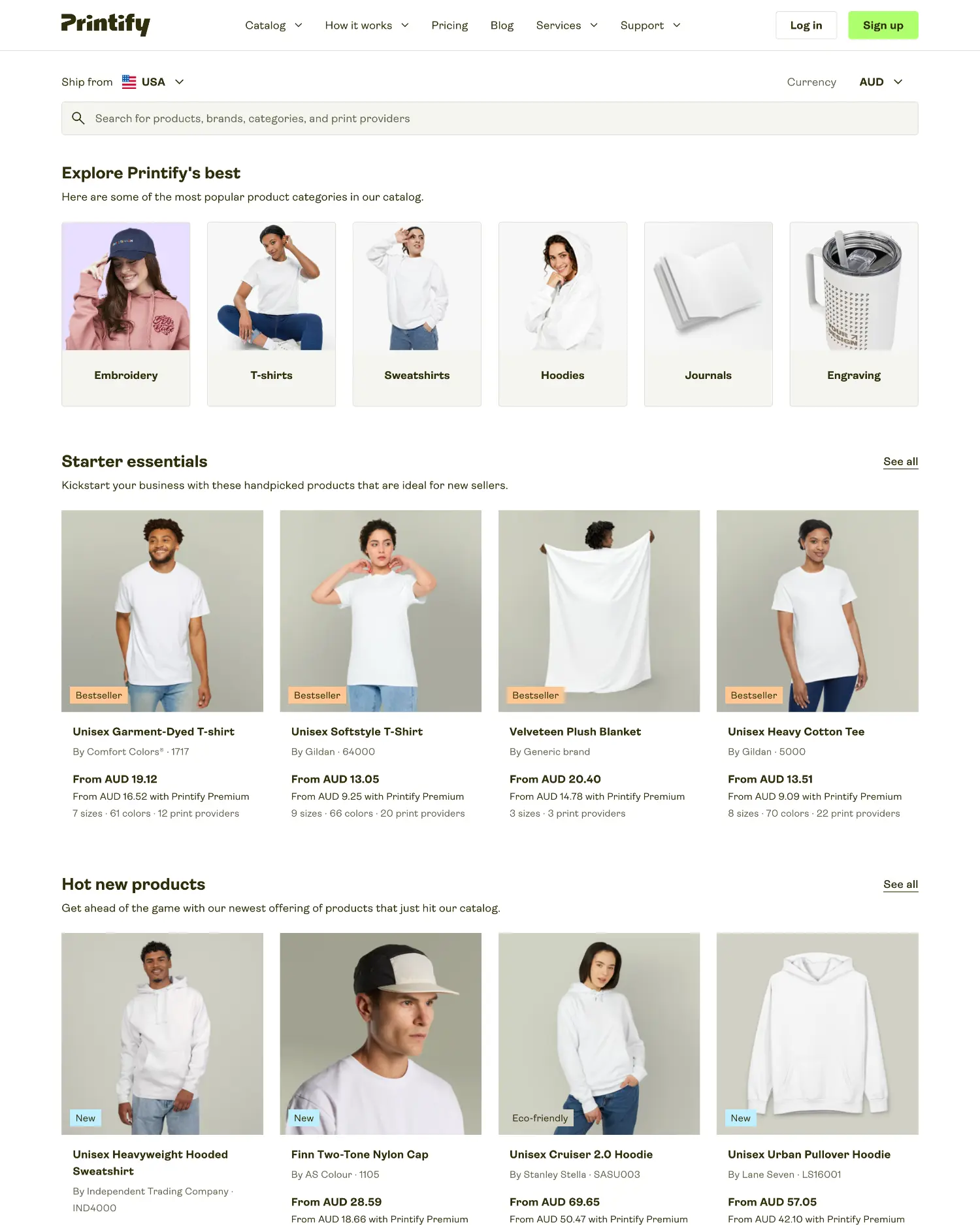
Printify
- Shipping Model: Manual routing. You must choose the specific printer location for your products.
- Production Footprint: An open marketplace connecting you to dozens of independent print shops globally.
- Branding Options: Varies widely by provider (some offer neck labels, but options are generally basic).
- Customs Exposure: High, unless you manually set up complicated order routing to ensure local printing.
- Base Pricing: Highly competitive base prices, but costs fluctuate heavily depending on the specific print shop, product, and region.
- Best For: Sellers who primarily target the US market and are willing to manually manage order routing.
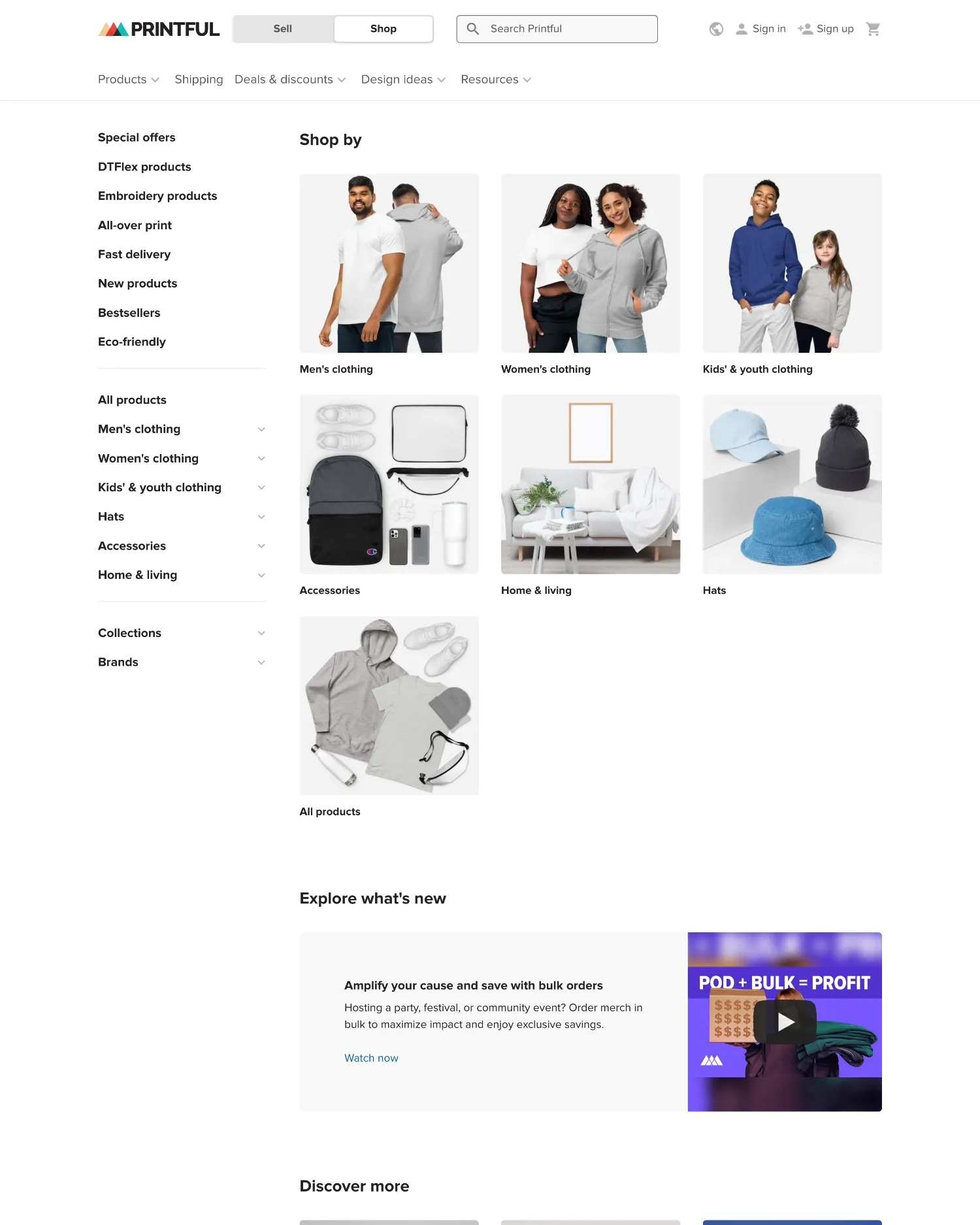
Printful
- Shipping Model: Automatic routing, limited to their proprietary facilities.
- Production Footprint: In-house production with massive hubs primarily in the US, Mexico, and Latvia.
- Branding Options: Extensive white-label options, including inside neck labels and custom packaging stickers.
- Customs Exposure: Moderate. They have international hubs, but catalogue limitations mean some products still ship cross-border.
- Base Pricing: Premium pricing. Generally the highest base costs of the three, which impacts profit margins.
- Best For: Sellers building a high-end streetwear or luxury brand where in-house quality control is the top priority.
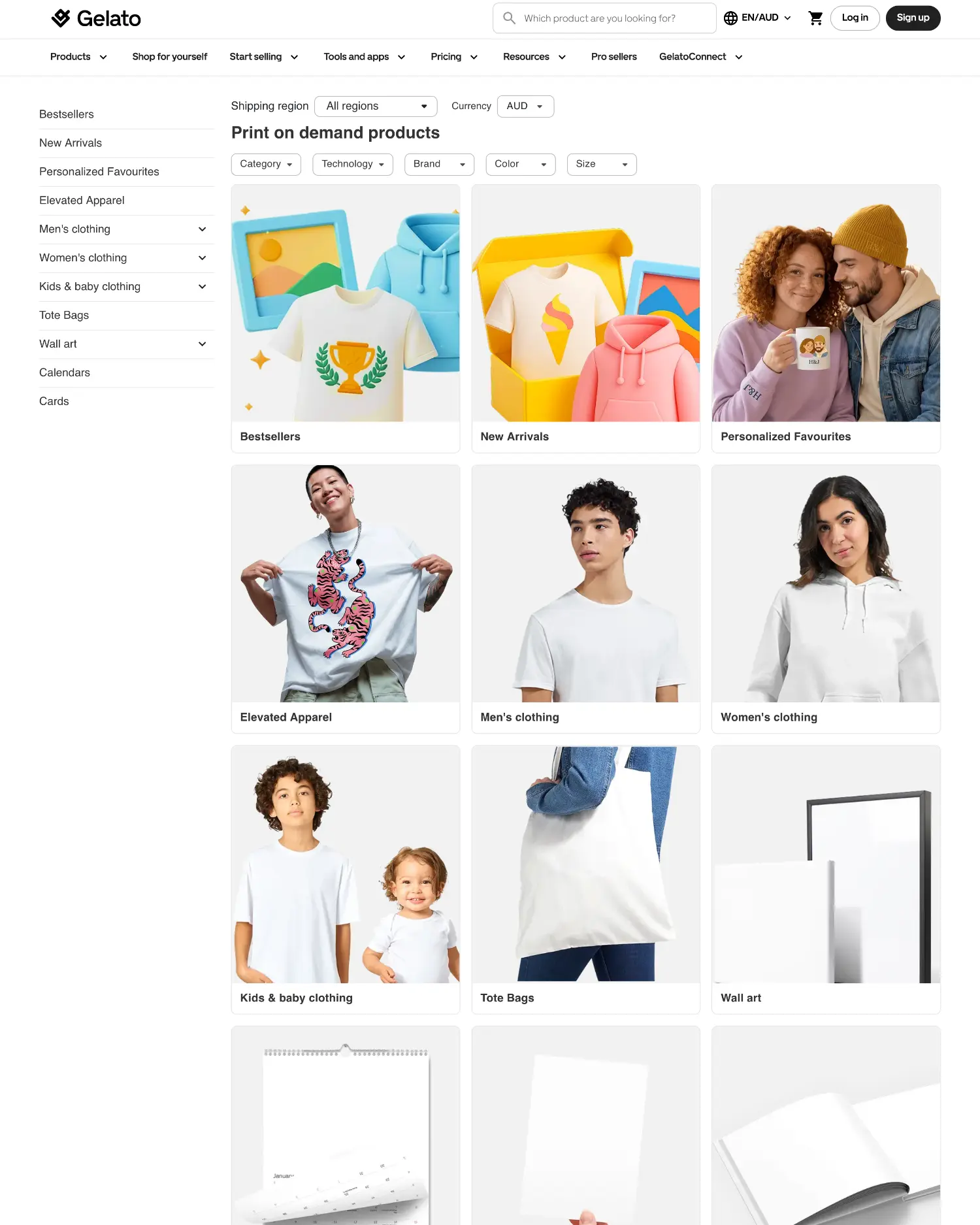
Gelato
- Shipping Model: Dynamic and fully algorithmic routing based on the buyer's location.
- Production Footprint: Hyper-local global network utilizing 140+ vetted facilities across 32 countries.
- Branding Options: Strong. Offers branded labels and packaging inserts (including personalized cards) in multiple countries.
- Customs Exposure: Extremely low. Because 90% of orders are produced in the same country they are delivered to, cross-border fees are virtually eliminated.
- Base Pricing: Excellent margins. Low base prices combined with massive savings on international shipping costs.
- Best For: International sellers who want to scale globally with fast shipping, zero customs fees, and protected profit margins.
Printify for International Etsy Sellers: Pros & Cons
Printify operates differently from the others. It is an open marketplace for different print shops around the world. Printify doesn't own the printers. Instead, they connect you with independent print shops globally.
What I Like:
Printify offers highly competitive pricing and incredible variety. Because the print shops are competing against each other on the platform, you can find low base costs for products, especially if you subscribe to Printify Premium. They also have a massive catalogue of over 900 products, meaning if you want to print on something obscure, Printify is highly likely to have it.
What Could Be Better:
For global sellers, Printify’s logistics can be a nightmare. When you create a product, you have to manually choose which print provider fulfills it. If you choose a provider in Australia, your US customers will face long shipping times and high fees. If a customer orders a t-shirt (printed by Provider A) and a phone case (printed by Provider B), the customer receives two separate packages, and you are charged for shipping twice. Managing this requires setting up complicated "Order Routing," which can be frustrating and time-consuming. Additionally, because pricing varies by provider and region, your profit margins can be wildly unpredictable on international orders.
Printful for International Etsy Sellers: Pros & Cons
Printful is the industry heavyweight. Unlike Printify, Printful owns and operates its own massive, state-of-the-art printing facilities, mostly located in the US, Mexico, and Latvia.
What I Like:
Printful’s quality control is great. Because they own the machines, a shirt printed in their US facility looks identical to a shirt printed in their European facility. Also, Printful allows for robust "white-label" branding. You can pay extra to have them print your logo on the inside neck label, or drop a custom branded sticker into the shipping bag. If brand identity is your absolute top priority, Printful is a strong contender.
What Could Be Better:
Going with Printful is more expensive. Their base product costs are usually the highest of the three POD providers, which directly eats into your already thin profit margins on Etsy.
Also, their global reach has gaps. While they have partner facilities in places like Australia, the local catalogue is more restricted. If an Australian customer orders a specific premium hoodie that is only stocked in Printful's Latvia facility, that order has to cross the world. Shipping from Latvia to Australia can take 10 to 15+ days, which frustrates modern buyers who expect Amazon-like speeds.
Gelato for International Etsy Sellers: Pros & Cons
Gelato is a software-first network. Like Printify, they don't own the printers. But unlike Printify, you don't have to manually manage the print shops. Gelato partners with over 140 vetted printing facilities across 32 different countries, and their algorithm seamlessly handles the rest.
What I Like:
Gelato solves the international shipping headache through "dynamic routing". You create one single listing on Etsy. When a customer in the UK buys it, Gelato automatically sends the order to a UK printer. When a customer in Australia buys that exact same listing, Gelato routes it to an Australian printer.
According to their data, 90% of Gelato orders are produced locally. This is a game-changer for Etsy sellers. From my testing, local orders routinely arrive in just 3 to 5 days. You also get excellent profit margins because Gelato pairs highly competitive base pricing with massive savings on local shipping. Plus, because the product travels a shorter distance, local production severely reduces carbon emissions, allowing you to market your shop as an eco-friendly option.
Even with a vast global network, Gelato offers strong branding options. They provide branded labels and packaging inserts (including personalized cards) in multiple countries, allowing you to build a cohesive brand experience without sacrificing local production speeds.
What Could Be Better:
Because Gelato heavily prioritizes local production efficiency, their overall product catalogue isn't quite as massive as an open marketplace like Printify. However, they comfortably cover all the best-selling apparel, wall art, and drinkware categories that the vast majority of Etsy sellers need to run a highly profitable store.
About VAT, Customs, and Margin Pressure
Let’s talk about the hidden costs of selling globally. If you do not understand these, your shop will suffer.
When you use a platform that relies on shipping goods across international borders (like shipping a US-printed shirt to a buyer in Europe or the UK), the package has to go through customs.
- The Customs Delay: Customs checks can add 3 to 7 days to a delivery timeline.
- The Surprise Fees: If you sell to the EU or UK, Value Added Tax (VAT) applies. While marketplaces like Etsy usually collect this tax at checkout, the package can still be held up at the border, and the local postal service may charge the customer a "handling fee" to release the package.
- Margin Pressure: Paying international shipping rates destroys your profit margins.
This is where Gelato’s local production model becomes a massive financial advantage. Because they have facilities inside the UK, the EU, Australia, and North America, your packages are treated as domestic mail. A package printed in Germany and mailed to Berlin never crosses an international border. There are no customs checks, no unexpected handling fees for your buyer, no delays, and you pay cheap local shipping rates—keeping your profit margins intact.
So, Which POD Provider Should International Etsy Sellers Choose?
There is no single "perfect" platform, but there is a clear winner depending on your specific business goals in 2026.
Choose Printify if...
You are a US-based seller who strictly wants to sell to US-based customers. If you don't mind manually managing order routing and are willing to navigate regional price fluctuations, Printify’s massive open marketplace offers a vast catalogue of unique items.
Choose Printful if...
You are building a high-end streetwear or luxury brand where in-house quality control and premium unboxing experiences matter more than base profit margins.
Choose Gelato if...
You want to scale a global Etsy business while fiercely protecting your profit margins. If you want to sell to the US, Europe, and Australia from a single Etsy listing, completely bypass cross-border customs fees, and ensure your customers receive their orders in under a week, Gelato is the smartest strategic choice.
Frequently Asked Questions
Does Printify or Printful have faster shipping?
It depends entirely on the customer's location. Printful has very consistent shipping times from its main hubs, while Printify's speed relies on which specific independent print shop you manually select. For international orders, both can be slow if the item has to cross borders.
Which POD platform is best for international Etsy sellers?
Gelato is currently the best option for non-US sellers and global sellers. Because they have over 140 facilities in 32 countries, they automatically route your orders to a printer located closest to your buyer. This ensures fast, domestic shipping speeds regardless of where you or your customer live, keeping your margins high and your delivery times low.
How do I avoid customs fees with Print on Demand?
The only way to completely avoid international customs delays and surprise handling fees is to use "local production." By using a platform like Gelato that prints the product inside the customer's own country or trade zone (like the EU), the shipment is treated as standard domestic mail.