(This article was created in partnership with Printify.)
Search Etsy for “funny cat shirt” and scroll for a minute.
Same mockup. Same font. Same price. That’s what most print-on-demand shops look like to a buyer. And it’s why so many POD sellers list 50 designs, wait a month, and hear nothing.
Here’s the good news: print-on-demand on Etsy still works in 2027. It just rewards sellers who look and feel different from the shop next door.
Etsy has also tightened the rules this year. New listing photo requirements arrived in November, and they affect almost every POD shop. So standing out now means being distinctive and compliant.
In this guide, I’ll walk you through nine practical ways to make your POD shop the one buyers remember. Each one ends with a small task you can do today.
You don’t need to do all nine at once. Below is a simple 30-day plan that doubles as a preview of everything we’ll cover.
Let’s get started.
Your 30-Day Plan to Stand Out
Here’s a quick preview of the nine ways, and how I’d spread them over a month:
- Week 1: Foundations. Write your niche sentence, check your production partner settings, and audit your photos (Ways 1–3).
- Week 2: Product. Add personalisation to your best seller and put your top design on one new product type (Ways 4–5).
- Week 3: Visibility. Rewrite five underperforming titles and refresh your shop branding and packing slip (Ways 6–7).
- Week 4: Experience. Fix any shipping flags and set up your saved replies (Ways 8–9).
1. Niche Down to a Specific Buyer
“Dog lover” isn’t a niche. “Greyhound owners who volunteer at rescue fundraisers” is.
When you design for everyone, you compete with everyone, including shops with thousands of reviews. When you design for one specific person, your listings speak directly to them. They feel seen, and they’re far more likely to buy.
Printify’s 2026 Etsy trends roundup flags micro-niches like reptile owners (think bearded dragon gifts) and pet personalisation. That’s the level of detail to aim for.
Here’s how I’d find yours:
- Start with what you know. A hobby, job or identity you understand from the inside: nurses, rock climbers, book clubs, new grandparents.
- Read your competitors’ 2–4 star reviews. They tell you exactly what buyers wish was different. I break this down in Why 2–4 Star Reviews from Your Competitors are the Best Etsy Product Research.
- Validate before you design 20 versions. Check demand first with my guide on how to validate an Etsy product idea.
Do this today: Write one sentence describing your ideal buyer: who they are, what they love, and what they’d proudly wear or display. Every new design has to pass that test.
2. Make Designs That Are Truly Yours (and Etsy-Compliant)
POD items sit in Etsy’s “designed by a seller” category. Under Etsy’s Creativity Standards, that means original designs you created, produced with the help of a production partner.
The key word is original. And it’s also your biggest advantage, because a design only you can make is a design nobody can undercut.
A few things to get right:
- Skip the clip art packs. Adding text to a purchased template isn’t your original design. Some sellers report these listings losing visibility or being removed.
- Lead with human-made work. Many Etsy buyers are actively looking for things made by real people, so your own hand-drawn or hand-built artwork is a genuine selling point. If you do use AI anywhere in a design, Etsy requires you to disclose it in the listing description.
- Stay clear of other people’s IP. No brand logos, characters or song lyrics, however popular they are.
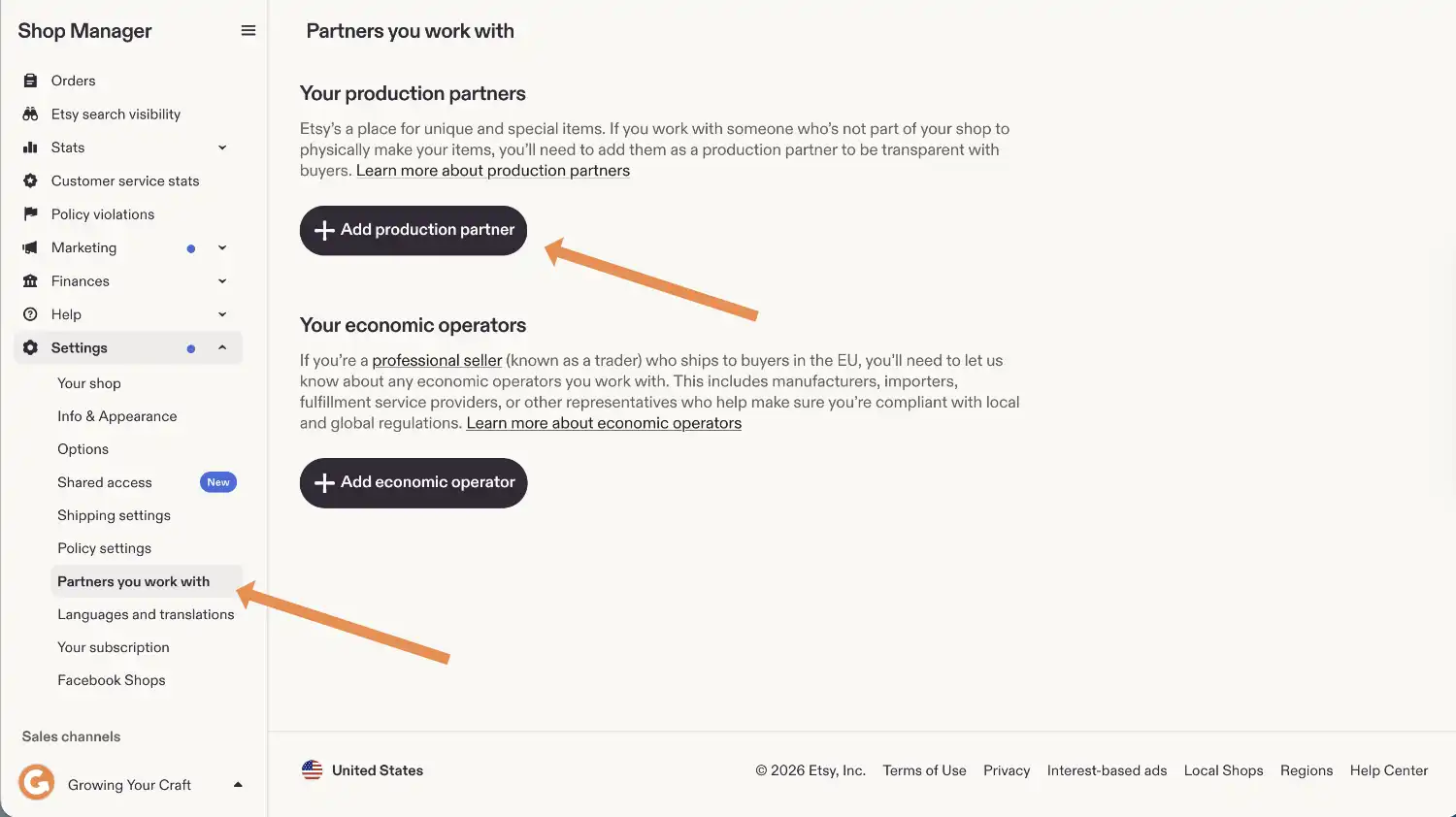
- Declare your production partner. Etsy requires you to disclose who makes your items. Add your partner once in Shop Manager → Settings → Production partners, and both Printify and Printful will assign it to new listings you publish through their integrations. If you’re on Printful, its step-by-step guide to selling Printful products on Etsy walks through the full setup.
Do this today: Open your Production partners settings and check your partner is listed and assigned to every POD listing.
3. Show the Real Product (and Follow Etsy’s New Photo Rules)
Your first photo decides whether a buyer clicks. If it looks like every other listing in the search results, they scroll straight past.
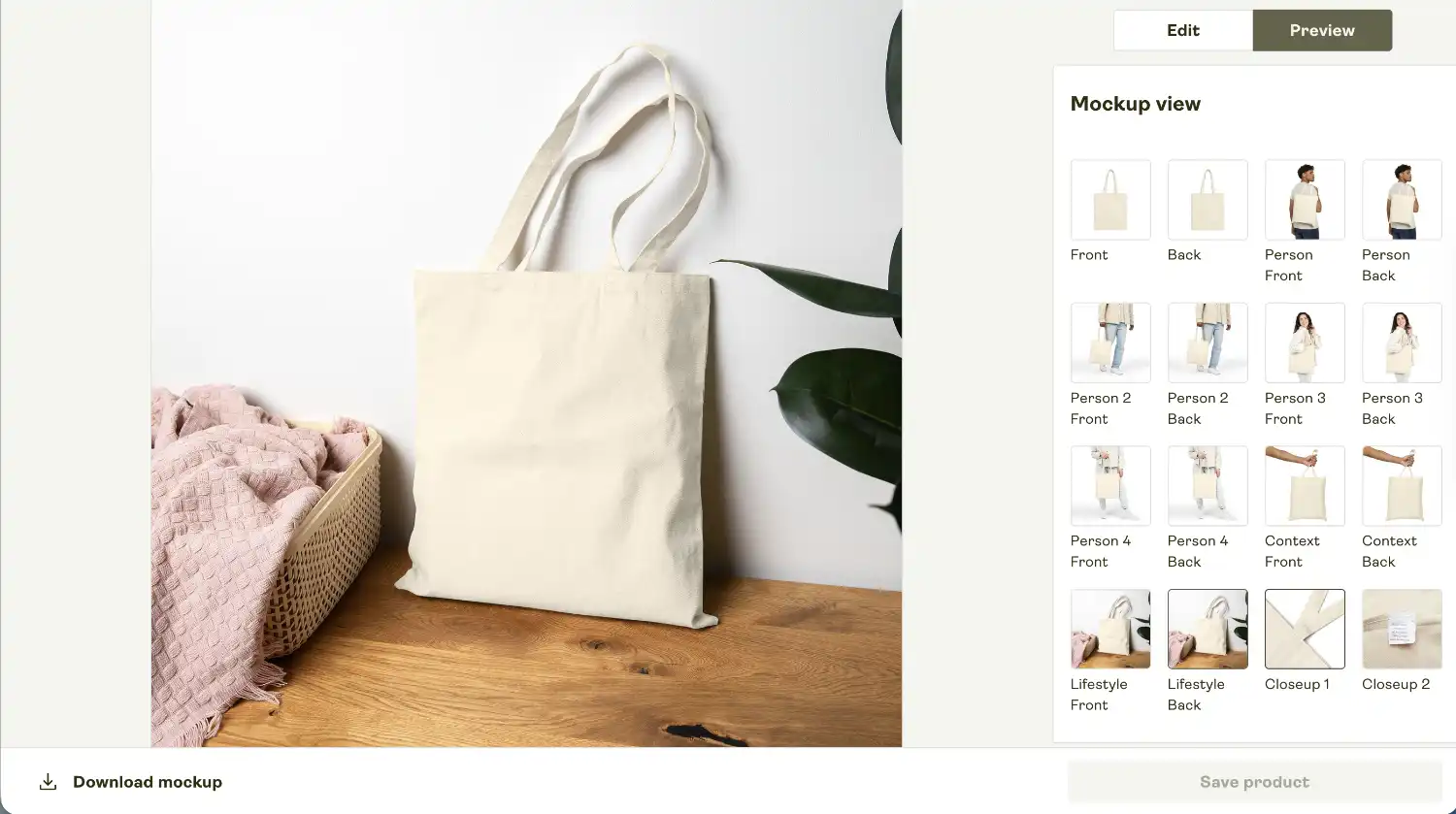
It also needs to follow Etsy’s updated rules. Since 6 November 2026, most physical listings need at least one unedited photo of the actual item. POD sellers get an exception: an authorised mockup can stand in for that photo, as long as it’s your original design on a standard blank like a t-shirt or mug.
What counts as authorised? Mockups from your provider’s mockup generator, or ones you have a licence to use for product listings. Mockups saved from Google or Pinterest don’t count. Etsy says proactive checks are planned for early 2027, so now is a good time to tidy up.
You can still edit your other photos, as long as they show the item’s true colour and scale. Making heather grey look like charcoal, or hiding a print flaw, crosses the line.
Now for the standing-out part: order a sample. Mockups all look alike. A real photo of your shirt on a real person, in natural light, instantly looks different. Printful gives connected stores 20% off sample orders from the month after you connect, which takes some of the sting out.
There’s a bonus, too: one sample goes a long way. Photos that show the product itself, like the fabric up close, the fit on a model, or the stitching and neckline, can be reused on every listing that uses the same blank. So one real t-shirt can give you genuine photos for all your t-shirt listings.
Then use the space Etsy gives you: up to 20 photos and two videos per listing. Show the print up close, the fabric, the size on a body, and the product in use. My guides on the 5 essential camera angles for Etsy product photos and why your listings need a video will help.
Do this today: Check that every listing has at least one mockup from your provider’s generator (or a photo of a sample), and replace any image you can’t trace to a licensed source.
4. Offer Personalisation
Personalisation is the easiest way to make a POD product one of a kind. A competitor can copy your design style. They can’t copy a mug with your buyer’s dog’s name on it.
Etsy rebuilt personalisation this year, and it’s now much more useful:
- Up to five fields per listing (since May 2026). Etsy now calls these “custom options”. Each field can be a text box, a list of options, or a file upload, so buyers can send a pet photo or pick a font right on the listing.
- Paid personalisation (since July 2026). You can add a charge to optional text fields, from $0.20 to $500 USD. Etsy suggests moving any personalisation charges you currently run through variations over to custom options.
- Reusable options. Set up a custom option once and reuse it across listings, instead of rebuilding it every time.
Your POD provider needs to handle the other side. Printify’s Etsy integration supports personalisation, with Live Previews so buyers see their name or initials on the product before they check out. Printful’s personalisation tool brings personalised orders in as drafts, so you can check the details before anything is printed.
A few ideas that work well: names and birth years on mugs, custom pet portraits from an uploaded photo, family surnames on Christmas ornaments, and team names on tote bags.
One tip: make your main image a finished example, not a blank product or placeholder text. Buyers need to picture the end result.
Do this today: Add one personalisation field (a name, date or initials) to your best-selling design, then compare its conversion rate in 30 days.
5. Build a Product Mix Beyond T-Shirts
T-shirts are the most crowded corner of Etsy POD. I’m not saying don’t sell them. But if every design you own lives only on a tee, you’re fighting for attention in the busiest aisle.
Instead, think in collections. Take one strong design and put it on three or four products your niche buyer would actually use:
- Mugs and drinkware for the everyday gift buyer.
- Stickers as a low-cost way to test new designs before you commit to bigger products.
- Wall art and posters for home décor shoppers.
- Ornaments for the Christmas rush (timely, if you’re reading this in November).
- Tote bags, journals and pet products for buyers who already own plenty of shirts.
You won’t run out of options. Printify’s catalogue alone lists more than 2,000 products.
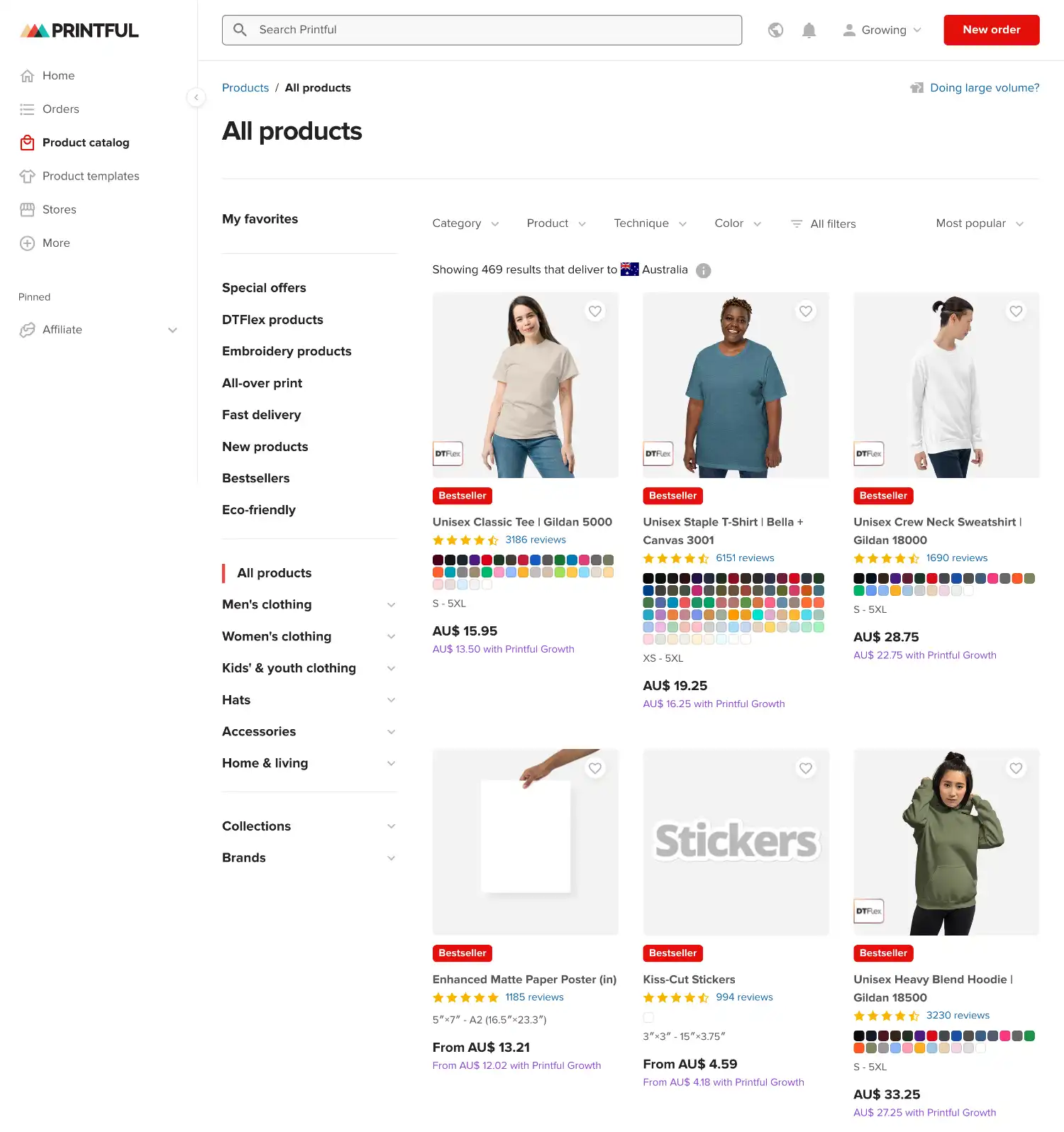
Etsy also gives you two handy tools here. You can bundle up to three listings together at a discount, so a buyer grabs the mug and the matching tote. And since September 2026, listings can have three variations instead of two, which suits POD perfectly: product style, colour and size in one listing.
Keep it cohesive. The catch with a big product mix is that your shop can start to look like a jumble sale. Tie everything together with a few simple rules: a small colour palette, only three or four fonts across all your designs, and the same style of product photos (same backgrounds, lighting and angles). A buyer should be able to land on any listing and know it’s yours.
Do this today: Take your best-selling design and add it to one non-apparel product your niche buyer would genuinely use.
6. Write Listings for Buyers (and Etsy Search)
Etsy search works in two steps. First, it finds listings that match what the buyer typed. Then it ranks them using factors like relevance, listing quality, customer service, shipping price and recency.
Great designs can’t sell if they never show up. So here’s how to write listings that get found and get clicked.
Titles: short and buyer-friendly. In April 2026, Etsy updated its title guidance: say clearly what the item is, put the key details (colour, material, size) up front, and keep it under 15 words. Long, keyword-stuffed titles are out.
- Before: Bearded Dragon Shirt, Reptile Lover Gift, Lizard Mom Tee, Funny Reptile Shirt, Gift for Her, Bearded Dragon Mom
- After: Bearded Dragon Mom T-Shirt, Retro Sunset Reptile Graphic Tee
Tags: use all 13. This is where the extra phrases go. Use the multi-word searches buyers actually type, like “bearded dragon mom” or “reptile lover gift”. Occasions such as “gift for her” belong in tags, not the title. Two rules to keep in mind: each tag can be 20 characters at most, and you shouldn’t repeat the same word across lots of tags, even “gift”. If five tags all say “gift”, you’ve spent five tags on one idea. Spread them across different searches instead, like “lizard owner shirt” or “retro reptile tee”.
Attributes: fill in every one. Colour, occasion, holiday and style attributes give Etsy more ways to match your listing to a search, and buyers use them as filters.
Description: answer questions first. Open with sizing, materials, processing time and personalisation instructions. Clear, specific answers mean fewer questions in your inbox and more confident buyers.
One warning: don’t rewrite titles on listings that are already selling well. If it isn’t broken, leave it alone.
Do this today: Rewrite the titles on your five lowest-performing listings using the new guidance, then check their stats in 30 days.
7. Brand Your Shop and Your Unboxing
Etsy buyers like buying from people, not faceless stores. And since September 2026, search results can show your name, shop name, time on Etsy, sales and location before a buyer even clicks. Your shop presence is now part of the first impression.
Start with the basics:
- Shop icon and banner that match your niche and style.
- An About section with your story and a real photo of you.
- A consistent look across your shop, using the same palette, fonts and photo style from Way 5, so buyers recognise your products in a crowded search.
Then think about what happens when the parcel arrives. Print-on-demand doesn’t have to mean anonymous:
- Printful ships white-label, with no Printful branding in the package. You can add your logo and a custom message to the packing slip for free, and Etsy gift messages are printed on it automatically. Custom inside labels cost $0.99 to $1.25 per garment. You can also send in pack-ins like thank-you cards or stickers ($0.50 picking fee each, plus a $25 monthly storage minimum, at its in-house facilities).
- Printify branding options depend on the print provider you choose. Some offer packaging inserts, gift messages or neck labels, so check each provider’s details before you pick one.
A small touch like a thank-you note with a discount code for their next order can turn a one-time buyer into a repeat customer.
Do this today: Add your logo and a short thank-you message to your provider’s packing slip settings.
8. Ship Faster and Cheaper Than the Shop Next Door
Two listings with similar designs and prices often come down to one thing: when will it arrive, and what will it cost to get here?
Etsy cares about this too. Since October 2024, US listings with domestic shipping under $6 have been prioritised in search, because Etsy’s data shows buyers are less likely to purchase once shipping hits $6. That still applies in 2026. A few listings are exempt, including those from shops outside the US, items over $35 in shops with a free shipping guarantee, and listings using calculated shipping. Check the Search Visibility page in Shop Manager to see if any of your listings are affected.
Where your products are printed makes a big difference to both speed and cost:
- Printify lets you choose print providers by location, and providers differ in price, shipping rates and colour output. Printify Choice routes each order to the best available provider based on price, quality and the buyer’s location. For international buyers, Printify Choice Global Fulfillment fulfils eligible products locally in the US, Canada, the UK, Australia and the EU. Printify’s provider rankings, based on reprints, production delays and reviews, help you pick reliable partners.
- Printful prints in its own facilities and pushes flat-rate shipping profiles to Etsy automatically, with processing times and delivery estimates included. You can also choose which Printful facility is your default country of origin.
Buyers can now filter Etsy search by where an item ships from, so local fulfilment matters more than ever.
One last thing: set processing times you can actually hit. Shipping late hurts your customer service stats, which brings us to the final way.
Do this today: Open the Search Visibility page in Shop Manager and fix any listing flagged for shipping price. Then check where your best-seller ships from for each of your top buyer countries.
9. Deliver Star Seller-Level Service
The Star Seller badge tells buyers, at a glance, that you’re a safe bet. To earn it, Etsy looks at four customer service stats over a three-month period:
- Message response rate: reply to 95% of first messages within 24 hours.
- On-time shipping and tracking: ship 95% of orders on time, with tracking.
- Average review rating: 4.8 stars or higher.
- Case rate: keep buyer cases to a minimum.
You also need at least five orders and $300 in sales in the review period. Etsy checks eligibility on the 1st of every month. Full details are on Etsy’s Star Seller page.
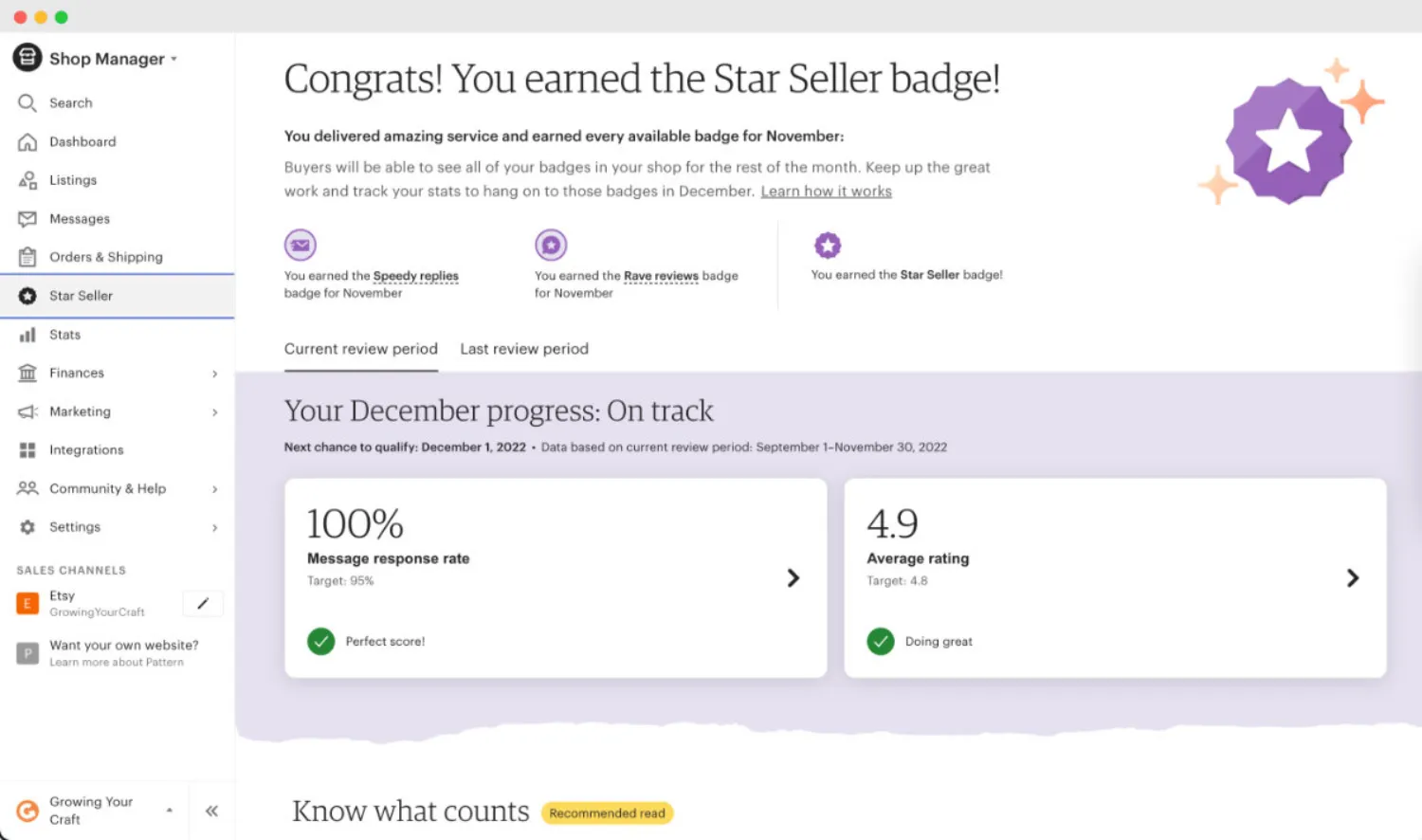
Even if the badge feels far off, these stats matter. Etsy factors customer service into search ranking, so better service means more visibility.
With POD, you don’t control the printing, so things will occasionally go wrong: a misprint, a delay, a parcel stuck in transit. The sellers who stand out own the problem fast. Printful, for example, lets you report damaged or misprinted items within 30 days of delivery, so you can get a replacement moving straight away.
A few habits that help:
- Use saved replies and auto-reply. Etsy’s auto-reply counts as a response for Star Seller, so you’re covered on weekends.
- Fix it first, explain second. A quick replacement often turns a frustrated buyer into a five-star review.
- Remember recent reviews count most. Since March 2026, ratings reflect your full review history but give more weight to recent reviews. What you do this month shows up quickly.
Do this today: Set up three saved replies: an order status update, a personalisation check, and a misprint apology with a replacement offer.
What’s Next
Standing out on Etsy isn’t about doing everything. It’s about doing a handful of things better than the shop next door, and doing them consistently.
The POD sellers still growing in 2027 aren’t the ones with the most listings. They’re the ones whose shops feel like a real brand made for a real person.
You’ve got this.