


Most Etsy sellers find out whether a product will sell in the most expensive way possible. They buy the materials, make the stock, photograph it, list it, and wait.
If it doesn't sell, they've lost weeks or even months of work and a shelf of supplies. And they still don't know why.
There's a better order. Check the demand first, then make the thing. Etsy gives you almost everything you need to do that, for free, in about an hour.
Let's get started.
Why "I'll Just List It and See" Is So Expensive
The listing fee is the smallest cost. The real cost is your time: sourcing, making, photographing, and writing a listing for something nobody was looking for.
A slow listing also teaches you very little. When nothing sells, you can't tell whether the problem is the demand, the photos, the price, or the keywords. You're guessing at four things at once.
Validation pulls those questions apart. It answers "does anyone want this?" before you spend anything on "is my listing good enough?"
Step 1: Harvest the Search Bar
Etsy's search bar suggests searches as you type. Those suggestions come from what real shoppers actually search for, which makes them one of the best free research tools you have. And that list of keywords update constantly by Etsy.
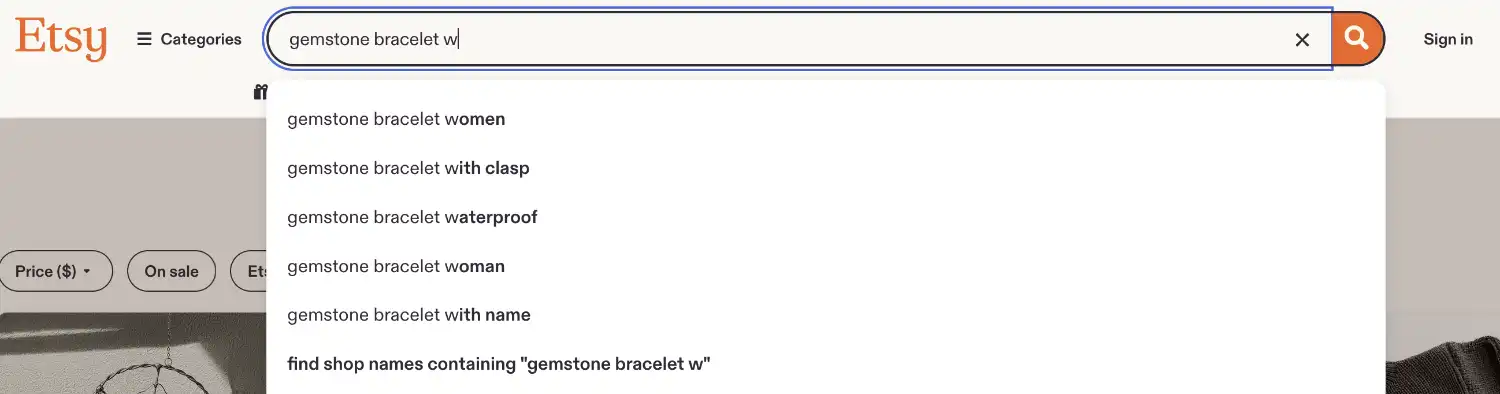
Here's how to use it properly:
- Open a private or incognito browser window first, so your own browsing history doesn't affect the search terms that Etsy suggests
- Type your product idea, then a space, then the letter "a", and write down every suggestion that fits
- Repeat for "b", "c" and so on through the alphabet
This is what I call the "A-to-Z method". It takes about fifteen minutes per idea.
What it tells you: lots of specific suggestions means people are searching in detail, which is a strong sign of demand. Very few suggestions, or none that match your idea, is an early warning.
Keep the list. Every phrase you collect here becomes a keyword candidate later.
Step 2: Look for Demand Labels on the First Page
Now search your main phrase and scroll through the first page or two of results.
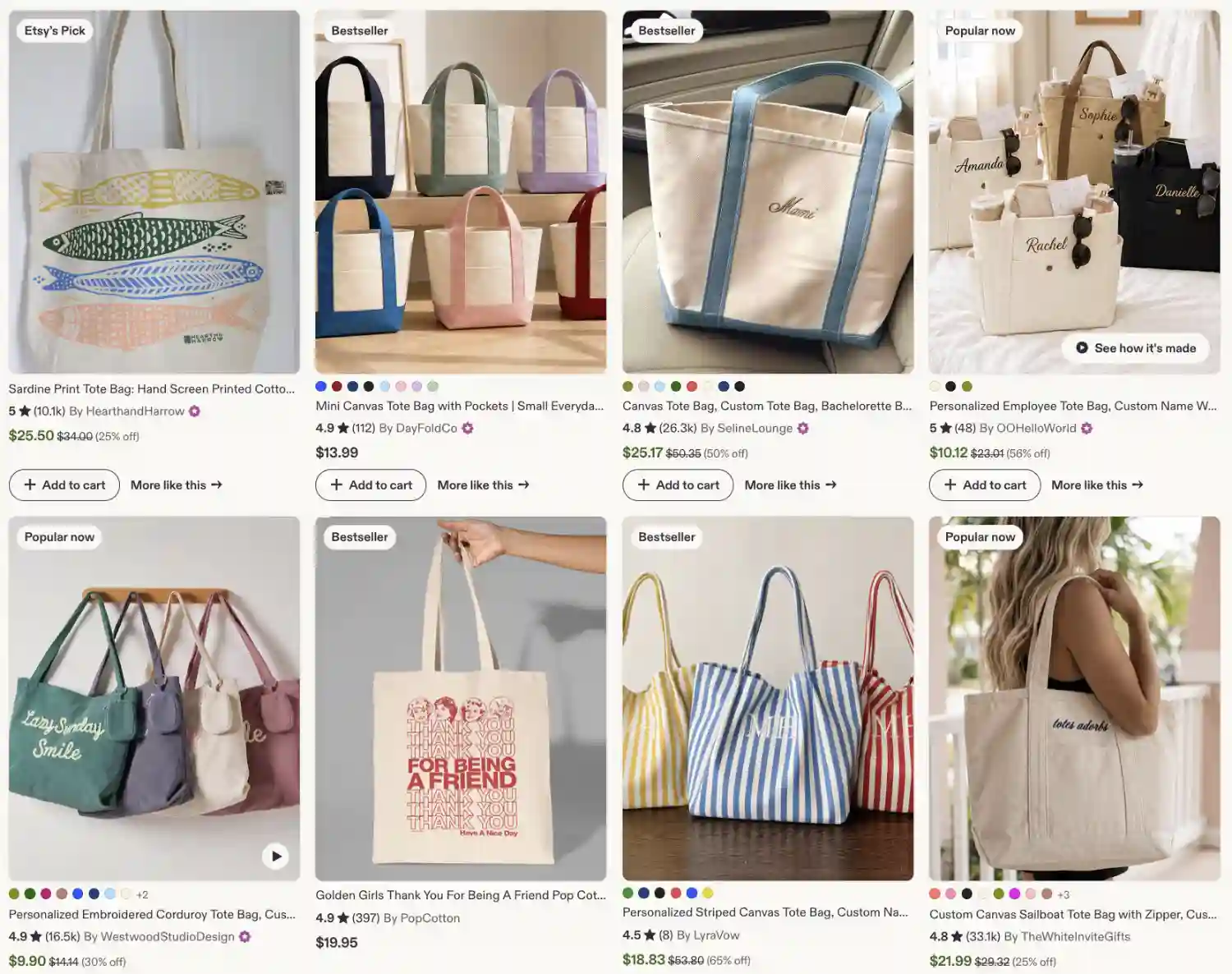
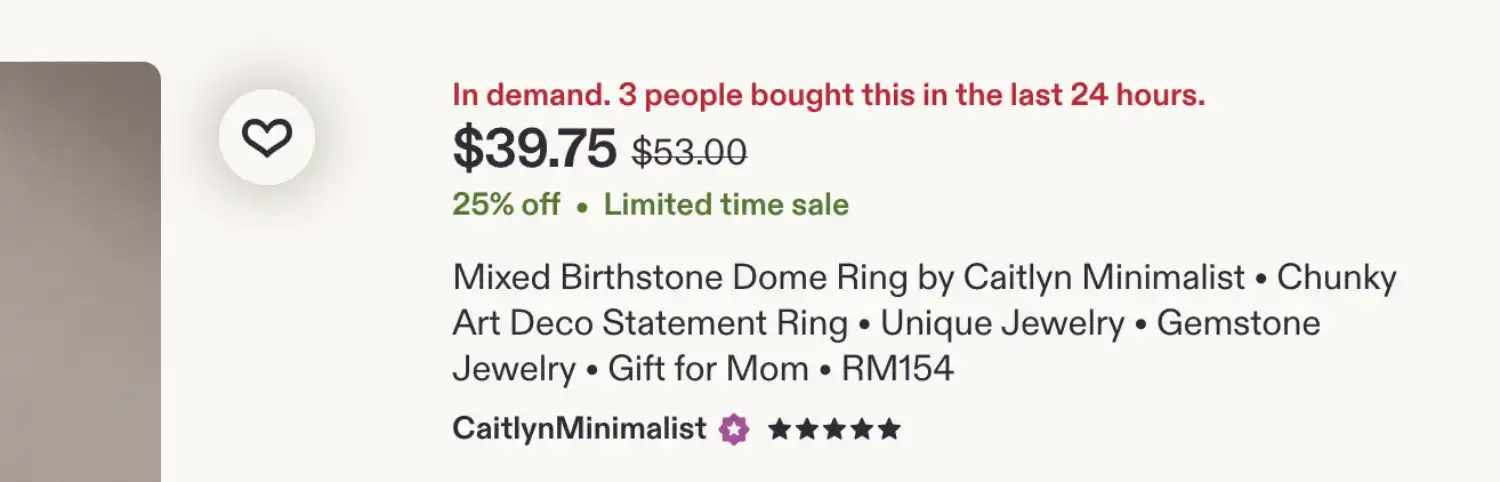
Look for the small labels Etsy adds to some listings, like "Bestseller" and "Popular now". Etsy would also show red text like "In 15 baskets" or "In demand. 2 people bought this in the last 24 hours." All of those are Etsy telling you that shoppers are buying right now, and indicate strong demand.
Many labels across different shops means strong, active demand. None at all usually means a small or cooling market.
Step 3: Use Reviews as a Public Sales Counter
Etsy doesn't show how many times a listing has sold. But reviews give you a rough signal, as long as you read them for rhythm rather than totals.
Open the top three to five listings for your phrase. Look at the dates on the most recent reviews.
- New reviews arriving every week or so suggest steady sales
- A few reviews a month suggest moderate sales
- A last review from months ago suggests the demand has cooled
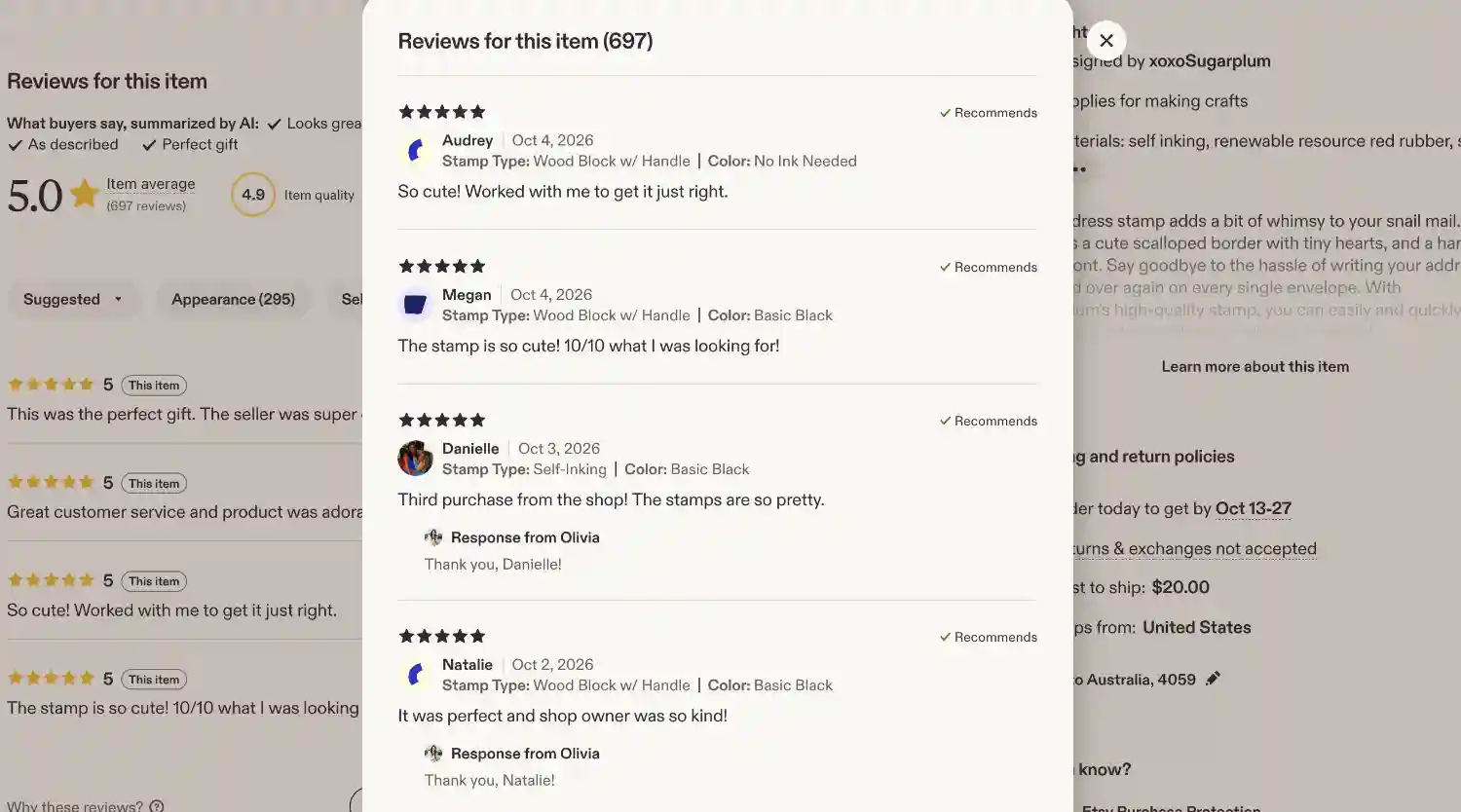
Only a small share of buyers ever leave a review (about 5-10%), so each one usually stands for several sales. Don't try to calculate exact numbers. Just notice the pace.
It's also worth checking whether those reviews are spread across several shops. Lots of shops selling steadily is a healthy market. One shop taking almost every sale can indicate a niche that cold be harder to break into.
Step 4: Put the Three Signals Together
Score each niche idea against these three checks:
- Search bar: it's a strong sign if Etsy suggests many specific phrases, and a weak one if it suggests few or none.
- Demand labels: it's a strong sign if several appear on the first page, and a weak one if there are none.
- Review pace: it's a strong sign if new reviews arrive weekly across several shops, and a weak one if they're months apart.
Mostly strong: You have demand. Move on to checking the competition.
A mix: There may be demand in a more specific corner. Try a narrower version of the idea and run the checks again.
Mostly weak: Put the idea away for now. You've just saved yourself weeks.
One important note. Demand is only the first question. A product can have strong demand and a first page full of excellent, well-established shops. That doesn't rule it out, but it does mean you'll need a sharper angle, which is the next step in your process of building an Etsy business with a strong foundation.
Common Traps to Avoid
- Friends saying they'd buy it. It's kind of them, but it isn't evidence.
- Instagram likes. Likes are applause, not orders.
- Researching while logged in. Etsy personalises results, so always use an incognito window.
- Falling in love with a idea too quickly. Once you're attached to an idea, it's very easy to read every signal as a yes.
- Checking once and never again. Demand changes over time, so re-run these checks every few months on your main products.
Where This Fits in Your Etsy Success
Checking demand before you make anything is Step 2 of Stage 1 in the GYC Etsy Success Roadmap: Find Your Winning Product. It's the step that saves the most time and money over the life of a shop.
Inside the GYC Etsy Academy, the Niche Research Workbook gives you a page for each product idea so you can record the evidence as you go. And the Advanced Niche Research deep dive covers the research tools that speed all of this up once you're comfortable doing it by hand.
If this method already sounds useful, the rest of the Roadmap is built the same way: one clear step at a time, in the order a shop actually needs.
Click Here to Explore the Etsy Success Roadmap →